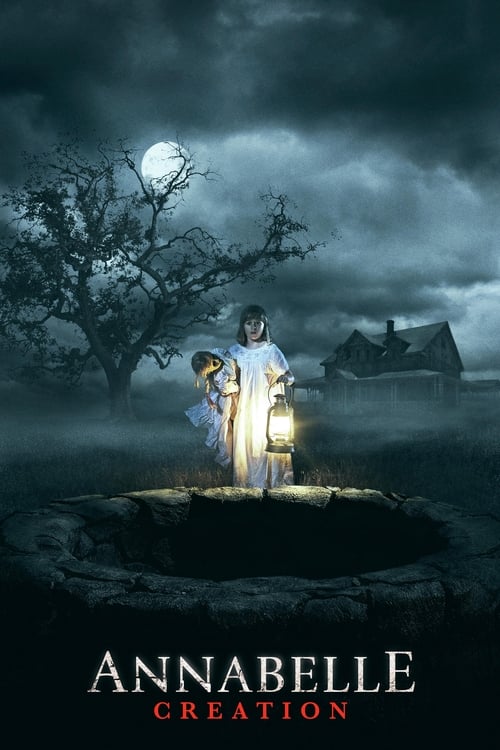
Annabelle: Creation (2017)
Directed by David F. Sandberg
No · Ultra Based
How we score movies →Consciousness Markers
The cast includes diverse actors such as Stephanie Sigman in a lead role, but this appears to be standard Hollywood casting rather than deliberate representation-focused choices.
The film centers female characters, but they exist primarily as plot devices for horror rather than embodying any feminist commentary or consciousness.
No LGBTQ+ characters, themes, or plot elements are present in the film.
The film contains no explicit exploration of racial themes or racial consciousness.
No environmental or climate-related themes appear in the film.
The film contains no critique of capitalism, wealth, or economic systems.
Body positivity or related themes are absent from the film.
No representation of or commentary on neurodivergent conditions is present.
Although set in 1955, the film makes no attempt to reexamine or reframe historical events or social dynamics of that era.
The film does not pause its narrative to deliver social or political messages to the audience.


Synopsis
Several years after the tragic death of their little girl, a doll maker and his wife welcome a nun and several girls from a shuttered orphanage into their home, soon becoming the target of the doll maker's possessed creation—Annabelle.
Why it received this score
Annabelle: Creation is a horror film so thoroughly uninterested in social commentary that it achieves a kind of purity. The narrative concerns itself exclusively with the mechanics of supernatural terror, the logistics of possession, and the practical problem of a cursed doll. That the film happens to feature female characters and an actress of Latin American descent changes nothing about its fundamental orientation toward the apolitical.
The film's setting in 1955 presents an opportunity for historical consciousness that remains entirely unexploited. The orphanage, the nun, the family drama, all are deployed purely as scaffolding for scares rather than as vehicles for any engagement with mid-century social reality. The female characters, while present and central to the plot, exist to be frightened rather than to embody any particular ideology or consciousness. They are neither empowered nor critiqued; they simply react to demonic circumstance.
What we have here is craft without consciousness. Director David F. Sandberg demonstrates competence in building dread and executing jump scares with technical precision. The film works as entertainment. But entertainment stripped of any pretense toward reflection or social awareness is precisely the kind of cultural product that escapes scrutiny entirely, and perhaps that is the point. Sometimes a haunted doll is just a haunted doll.
Analysis generated by our Consciousness Algorithm
Critic Reviews
“If some light deja vu is the price horror fans must pay for a mainstream offering this spine-tingling, most will still come away feeling spooked and satisfied. ”
“It's simply a treat to watch Sandberg's style on display in Annabelle: Creation, filled with circling dolly shots that reveal and conceal evil in torturously teasing ways, effective narrative use of practical lighting for dramatic effect, and heart-pounding sound effects and a score of screaming strings.”
“Closer in tone and old-school psychological fright tactics to the original film than either The Conjuring 2 or Annabelle, David F. Sandberg’s incisive approach capably resets the franchise.”
“It’s maddeningly unclear sometimes, the whole doll/possession/ghost story, as the filmmakers play extremely loose with the film’s internal logic. Couple that with the stale scent of well-worn dialogue. Stop me if you’ve heard this one before.”