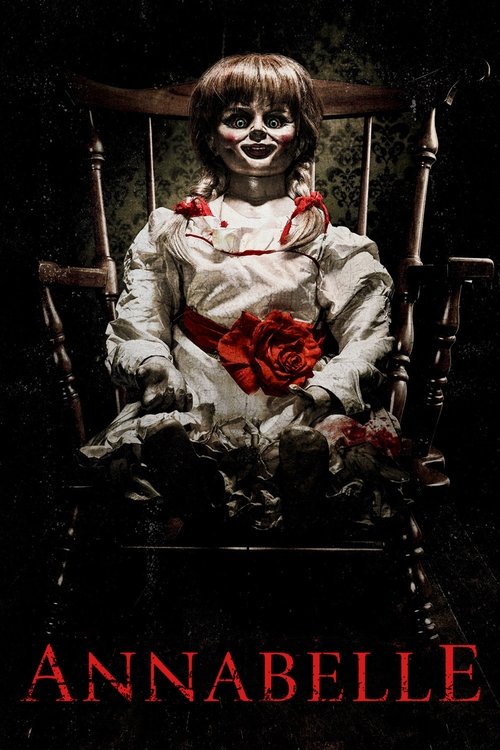
Annabelle (2014)
Directed by John R. Leonetti
No · Ultra Based
How we score movies →Consciousness Markers
The film occasionally veers toward expository dialogue explaining demonic possession and religious mythology, though this remains minimal and serves plot function rather than preachy purpose.
The cast includes Alfre Woodard in a minor role, but this appears incidental to the narrative rather than any conscious effort at representation. The film shows minimal attention to diverse casting.
No LGBTQ+ themes, characters, or representation are present in the film.
The film contains no feminist commentary or examination of gender dynamics. A pregnant woman is terrorized, but this is treated purely as plot mechanics.
No examination of race or racial dynamics appears in this film. Diverse casting is not accompanied by any thematic engagement with racial issues.
Climate themes are entirely absent from this supernatural horror narrative.
No critique of capitalism or class structures is present in the film.
Body positivity themes do not appear in this conventional horror film.
No representation of neurodivergent characters or exploration of neurodivergence exists in the film.
The film contains no historical narrative or revisionist engagement with historical events.


Synopsis
A couple begins to experience terrifying supernatural occurrences involving a vintage doll shortly after their home is invaded by satanic cultists.
Why it received this score
Annabelle arrives as a wholly unremarkable supernatural horror film, a prequel to The Conjuring that concerns itself with little beyond the mechanics of scaring its audience. The narrative mechanics are elementary: newlyweds in a home, a doll, demons, screaming. Director John R. Leonetti executes the formula with competent if uninspired efficiency, relying on conventional jump scares and an omnipresent orchestral score to manufacture tension. The film makes no apparent attempt to engage with any contemporary social consciousness, nor does it need to. This is a creature born of pure commercial calculation, a franchise expansion designed to capitalize on the success of its predecessor.
The cast exists primarily as victims to be imperiled. Annabelle Wallis and Ward Horton play the young couple with the emotional range of mannequins dressed in 1950s clothing. Alfre Woodard, the sole Black cast member, appears briefly as a concerned nurse, a role that registers as neither offensive nor particularly noteworthy. The film does not appear interested in interrogating gender dynamics, family structures, or institutional power. A pregnant woman is terrorized by demonic forces, but the film treats this as plot furniture rather than thematic material. One observes no attempt at subversion, no commentary, no awareness that such material might signify something beyond the surface terror.
The absence of cultural consciousness here is so complete that it approaches purity. Annabelle simply does not operate in the register where such questions might arise. It is horror as industrial product, crafted to deliver specific physiological responses in darkened theaters and subsequently disposed of from cultural memory. The film occupies the lowest tier of intentional social engagement, which is to say no tier at all. It is a film that exists, functions briefly, and leaves no philosophical residue whatsoever.
Analysis generated by our Consciousness Algorithm
Critic Reviews
“The late-60's Satanic panic and housewifely ennui make for a surprisingly complementary mix of fear and paranoia in Annabelle.”
“Each time a character gets tossed in the air by some manifestation or another, the effect is cheesy. Still, I've seen worse. For the record, the violence in Annabelle is far less copious and sadistic than the stuff in the Denzel Washington movie everybody's going to.”
“Annabelle is mostly a grab into the Great Big Bag O’ Horror Clichés: sound-bombs of shrieking violins explode randomly, doors slam unbidden, rocking chairs creak by themselves, machines suddenly whir to life.”
“For a superior experience, go buy a disturbing-looking doll that says ''Don't go see Annabelle'' when you pull its string.”