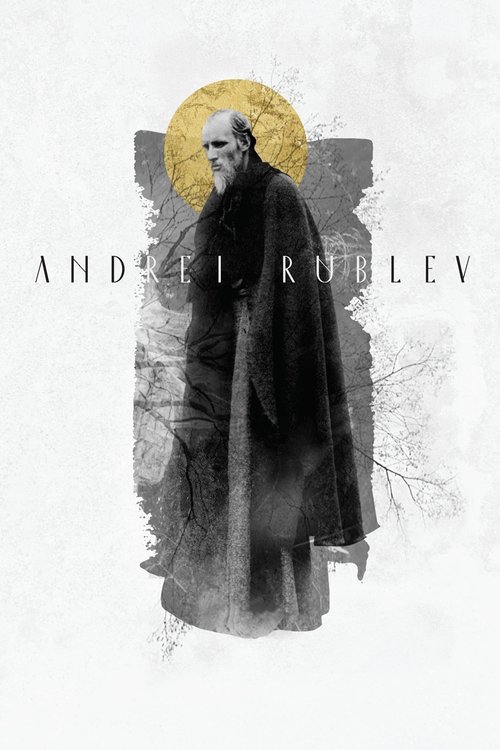
Andrei Rublev (1966)
Directed by Andrei Tarkovsky
No · Ultra Based
How we score movies →Consciousness Markers
The film examines the artist's spiritual integrity against worldly concerns and patronage, but this is framed as religious philosophy rather than economic critique. The anti-materialist sentiment is theological, not ideological.
Tarkovsky employs minimal dialogue and allows philosophical questions to emerge organically from visual narrative. The work resists preachy instruction, though its meditative pace might feel preachy to some viewers.
The cast is entirely male, reflecting historical accuracy of the period and monastic setting. There is no deliberate engagement with representation as a contemporary cultural concern.
No LGBTQ+ themes, characters, or subtext are present in the film. The work does not engage with questions of sexual orientation or gender identity.
The film contains no feminist commentary or engagement with gender equality. Women appear minimally and without agency or narrative focus.
The film does not engage with racial themes or demonstrate racial consciousness. It is set in medieval Russia with an ethnically homogeneous cast and no commentary on racial dynamics.
No climate-related themes or environmental consciousness are present. The natural world appears as backdrop rather than subject of concern.
Body positivity is entirely absent. The film treats the body as vehicle for spiritual struggle without any contemporary consciousness regarding body image or acceptance.
No engagement with neurodivergence, mental health, or neurodivergent representation. Rublev's trauma is presented as spiritual crisis rather than psychological condition.
The film treats history with reverence and seeks to understand the historical period on its own terms rather than reinterpreting it through contemporary ideological frameworks.


Synopsis
An expansive Russian drama, this film focuses on the life of revered religious icon painter Andrei Rublev. Drifting from place to place in a tumultuous era, the peace-seeking monk eventually gains a reputation for his art. But after Rublev witnesses a brutal battle and unintentionally becomes involved, he takes a vow of silence and spends time away from his work. As he begins to ease his troubled soul, he takes steps towards becoming a painter once again.
Why it received this score
Tarkovsky's "Andrei Rublev" is a work of profound artistic ambition and spiritual inquiry, but it remains fundamentally a product of its era in matters of cultural consciousness. The film examines violence, suffering, and the artist's moral responsibility during a turbulent historical period, themes that carry humanistic weight but lack the specific markers of contemporary progressive social awareness. The ensemble cast consists entirely of male characters engaged in philosophical and spiritual discourse, a choice that reflects both historical accuracy and the cinematic conventions of 1960s Soviet filmmaking.
The narrative unfolds as a series of meditative episodes exploring Rublev's creative journey and his struggle with faith following witnessing brutality. There is no engagement with representation as a deliberate artistic choice, no examination of gender dynamics, and no consciousness of the identity categories that would become central to late-twentieth-century cultural criticism. The film's engagement with history is reverential rather than revisionist, treating its medieval setting as a spiritual landscape rather than a site for contemporary ideological interrogation.
What distinguishes this work is its artistic sincerity and its refusal to lecture. Tarkovsky presents the material with contemplative patience, allowing viewers to draw their own conclusions about the relationship between art and suffering. The film operates entirely outside the framework of modern social consciousness discourse, which is precisely why it registers as such a low score on the scale we are measuring. It is a masterpiece of cinema, but it is not a product of, nor does it address, the cultural sensibilities of the 2020s.
Analysis generated by our Consciousness Algorithm
Critic Reviews
“Tarkovsky sets the stage for the rest of his career with Andrei Rublev.”
“In many ways, Andrei Rublev is truly about the impermanence of art.”
“You may dread being ground down by this extraordinary film, but fear not. It will bear you aloft.”
“Ultimately, Andrei Rublev comes across as a take-it-or-leave-it proposition, as if the director refused to make concessions on the grounds that to compromise his art was to cheapen and debase it.”