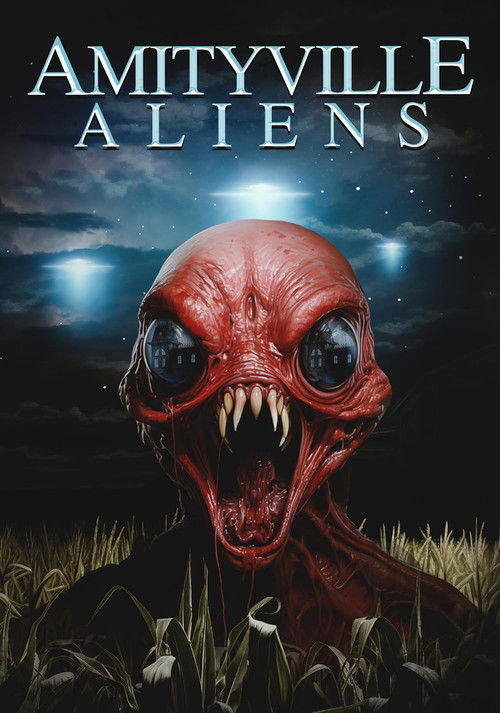
Amityville Aliens (2026)
Directed by Donald Farmer
No · Ultra Based
How we score movies →Consciousness Markers
The cast appears selected primarily for availability and interest in independent horror rather than any deliberate diversity strategy. No evidence suggests casting decisions were informed by representation considerations.
The film makes no discernible effort toward feminist commentary. Female characters appear primarily as victims or background figures within the alien invasion scenarios.
An eight-short anthology about alien invasions contains no apparent LGBTQ+ themes or representation. The shorts prioritize alien violence over any romantic or identity-based narrative.
The anthology contains no racial consciousness, commentary, or awareness. Racial dynamics are simply not a consideration within the narrative or thematic structure.
The film contains no anti-capitalist messaging or critique of economic systems. It is purely concerned with alien spectacle rather than social structure.
The shorts contain virtually no lecture energy or didactic impulse. They exist purely to deliver alien invasion horror without moral instruction or social lesson.
No climate themes or environmental consciousness appears anywhere in the film. Aliens invade Amityville for reasons entirely unrelated to ecological concerns.
Body positivity plays no role whatsoever. The film features aliens and mutations designed for horror rather than any commentary on bodies or acceptance.
No historical revisionism occurs. The film simply borrows the Amityville brand name and applies alien invasion scenarios with no engagement with history whatsoever.
The anthology makes no reference to neurodivergence, mental health, or neurodiverse representation. These concerns are entirely absent from the narrative.
Synopsis
Amityville anthology from horror legend Donald Farmer
Why it received this score
Amityville Aliens stands as a monument to the principle that not every film needs to engage with contemporary social consciousness, and this one has absolutely no interest in doing so. The project is a straightforward sci-fi horror anthology composed of eight shorts about alien invasions in the notorious Amityville location, directed by a collective of independent filmmakers with approximately zero concern for representation, messaging, or cultural commentary. Donald Farmer, producer of such celebrated works as Debbie Does Demons and Shark Exorcist, has assembled what amounts to a pure genre exercise: deranged spacecraft visitors, slimy mutations, brain-scrambling probes, and interplanetary mayhem, all delivered with the earnest incompetence that defines the micro-budget horror circuit.
The film's deliberate avoidance of anything resembling contemporary progressive sensibility is almost refreshing in its totality. There is no racial consciousness here, no feminist agenda, no climate commentary disguised as plot motivation. The cast appears selected for availability rather than demographic balance. The narrative structure, such as it is, contains no lecture energy whatsoever; the shorts simply occur, one after another, each pursuing its own vision of what happens when extraterrestrials descend on a location famous for being haunted by demons. This is horror filmmaking untouched by the anxieties of the 2020s cultural moment.
What distinguishes Amityville Aliens is its complete indifference to social consciousness. Whether this constitutes an artistic virtue remains a question best left to philosophers and therapists. The film asks nothing of its audience except that they tolerate practical effects and narrative incoherence in service of alien invasion spectacle. In an era of increasingly self-aware genre cinema, Amityville Aliens remains defiantly oblivious to everything except its own B-movie ambitions.
Analysis generated by our Consciousness Algorithm