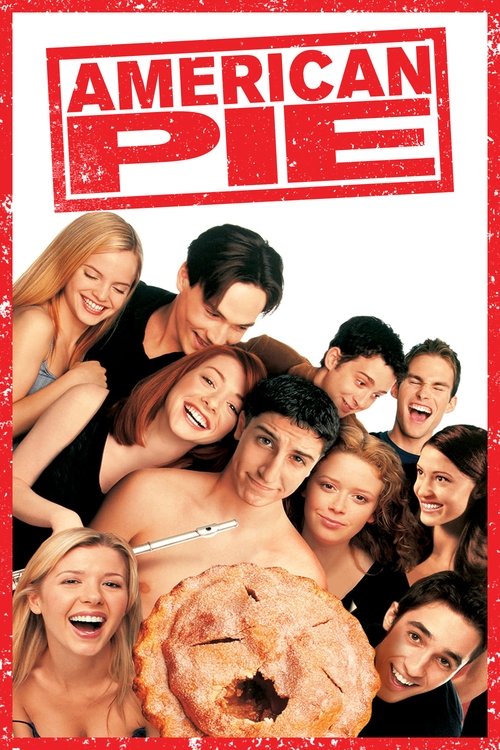
American Pie (1999)
Directed by Paul Weitz
No · Ultra Based
How we score movies →Consciousness Markers
The cast is predominantly white with minimal representation of actors of color. One Black character appears in a supporting role with minimal agency or character development.
Female characters are primarily portrayed as objects of sexual conquest or gatekeepers of male desire. There is no feminist critique or female agency in pursuit of their own goals.
The film does not engage in preachy messaging about social issues. Its humor derives from situation comedy rather than moral instruction, though some moments contain dated gender stereotypes presented without critical distance.
No LGBTQ+ themes, characters, or representation are present in the film. Sexuality is presented exclusively through a heterosexual lens.
No exploration of racial identity, racial justice, or racial dynamics. The film exists in a racially unmarked white default setting.
Climate change or environmental concerns are entirely absent from the narrative.
No critique of capitalism, wealth inequality, or economic systems. The film takes the consumer culture of suburban America as its natural backdrop.
Body diversity is not celebrated or represented. The cast conforms to conventional attractiveness standards without comment or critique.
No representation of neurodivergent characters or exploration of neurodivergence as an identity.
The film makes no attempt to reframe historical events or challenge conventional historical narratives.


Synopsis
At a high-school party, four friends find that losing their collective virginity isn't as easy as they had thought. But they still believe that they need to do so before college. To motivate themselves, they enter a pact to all "score" by their senior prom.
Why it received this score
American Pie arrives from an era when the concept of "progressive social consciousness" meant something entirely different than it does now. The film is a straightforward teen comedy about adolescent sexual anxiety, built on the assumption that heterosexual conquest is the primary lens through which young people experience their final year of high school. The cast is almost uniformly white, drawn from a narrow demographic bandwidth that the 1990s considered the default setting for American cinema. There is one Black character, played by Tina Majorino, who exists primarily to facilitate plot points for the white protagonists. She has no inner life, no arc, no dialogue of consequence.
What makes American Pie's score so low is not that it is morally corrupt, though it trades in some stale gender stereotypes. Rather, it simply predates the entire vocabulary of modern progressive cultural awareness. The film does not attempt representation because representation was not yet a framework through which Hollywood understood its obligations. There are no discussions of identity, no meta-commentary on power structures, no characters wrestling with systemic inequality. The women in the film are objects of conquest, categorized by their sexual availability or withholding. None of this makes the film uniquely bad by 1999 standards. It makes it typical. The absence of woke markers is not an achievement here. It is simply an artifact of its historical moment, a time capsule of assumptions so naturalized they were invisible.
The film's cultural legacy is that of a box office juggernaut that launched a franchise and defined late-90s teen comedy. It remains entirely innocent of the progressive frameworks that would come to dominate cultural criticism in the 2010s and 2020s. To score it as though it were a contemporary work would be absurd. To score it as a relic of its era, however, is to acknowledge that nearly every major studio comedy of its time operated from a similar baseline. American Pie is not uniquely retrograde. It is historically typical, which may be the only thing more damning.
Analysis generated by our Consciousness Algorithm
Critic Reviews
“It's painful, it's real, and it's probably the funniest thing you'll see this year...a teen sexploitation classic.”
“In addition to being extremely funny, the film has a warm spirit and respect for the characters.”
“Vulgar and lewd and raunchy like you wouldn't believe, and absolutely hilarious from beginning to end.”
“Gross and tasteless...this high-school romp mixes the gross and tasteless with sentimental mush.”