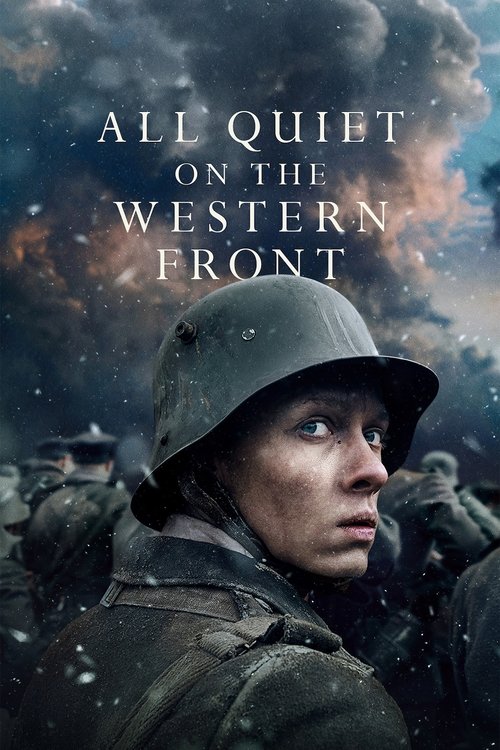
All Quiet on the Western Front (2022)
Directed by Edward Berger
No · Ultra Based
How we score movies →Consciousness Markers
The film's final scenes contain preachy messaging about the futility of war and institutional corruption that borders on speechifying, particularly in its framing of the armistice negotiations.
The film depicts the futility of military hierarchy and the expendability of soldiers, suggesting criticism of systems that sacrifice human life for institutional power.
The film features an all-male ensemble of German soldiers appropriate to its historical setting. No attempt is made to retrofit contemporary demographic representation.
No LGBTQ+ themes or characters are present in the narrative.
The film does not engage with feminist themes. Women appear minimally and incidentally to the male soldiers' experiences.
No explicit racial consciousness or commentary on race is present. The film focuses on the shared German military experience.
No climate-related themes or environmental consciousness appears in the film.
The film does not engage with body positivity themes. Bodies are depicted as suffering and destroyed by war.
No representation of neurodivergent characters or exploration of neurodivergence is present.
The film adheres closely to historical and literary source material without revisionist reinterpretation of events.


Synopsis
Paul Baumer and his friends Albert and Muller, egged on by romantic dreams of heroism, voluntarily enlist in the German army. Full of excitement and patriotic fervour, the boys enthusiastically march into a war they believe in. But once on the Western Front, they discover the soul-destroying horror of World War I.
Why it received this score
Edward Berger's 2022 adaptation of Erich Maria Remarque's WWI novel is a masterfully crafted study in the dehumanization of war, presented with the austere visual language of modern European cinema. The film's power derives from its unflinching commitment to depicting the senseless brutality of the trenches rather than from any particular agenda of cultural consciousness. Young soldiers are shown as uniformly tragic figures, ground beneath the machinery of imperial conflict, their deaths rendered with an almost clinical precision that refuses sentimentality. This is cinema in service of historical truth, not contemporary social commentary. The cast is predominantly white and male, as one would expect from a story about German soldiers in 1918, and the film makes no effort to retrofit modern demographic considerations onto its historical material. Such an approach would be absurd, and the film wisely avoids it. What emerges is a war film that earns its emotional devastation through craft rather than through the invocation of fashionable sensibilities. It is a serious work about a serious subject, which is precisely why it registers as almost quaint in its refusal to perform progressive consciousness.
Analysis generated by our Consciousness Algorithm
Critic Reviews
“A harrowing, gruesome, morbid tale of war, so compelling in its realism, bigness and repulsiveness that Universal’s Western Front becomes at once a money picture.”
“Anti-war statements of the cinema in the subsequent 80 years have occasionally surpassed Lewis Milestone’s technically and artistically groundbreaking film, but few can match it for relentless despair or elemental fury—both on and off the battlefield.”
“Perhaps the greatest antiwar film ever made, holding considerable power even now due to Lewis Milestone's inventive direction.”
“The point of the film gets to you, and though you may wince at the lines Maxwell Anderson wrote (every time he opens his heart, he sticks his poetic foot in it), you know what he means.”