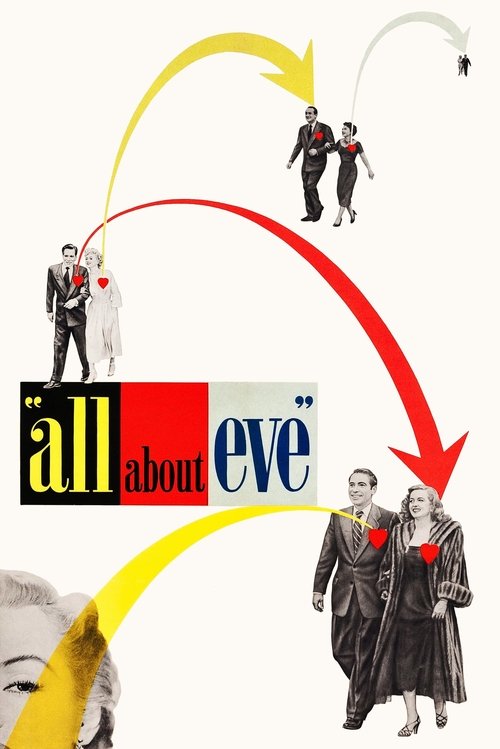
All About Eve (1950)
Directed by Joseph L. Mankiewicz
No · Ultra Based
How we score movies →Consciousness Markers
The film features powerful female characters and female ambition, but treats female agency with moral ambiguity. It depicts rather than endorses feminist ideology.
George Sanders' character has been interpreted by scholars and audiences as queer coded, and the film has become a gay icon. However, this is subtext rather than explicit representation.
The cast is entirely white with no meaningful minority representation. This reflects 1950s Hollywood standards but fails contemporary representation metrics.
The film critiques the theater world's mercenary nature and commodification of talent, but from a morally neutral standpoint rather than advocating systemic change.
Addison DeWitt delivers cynical monologues, but these are character moments rather than the film lecturing the audience about social issues or injustice.
The film contains no racial themes whatsoever and depicts an entirely white world without acknowledgment or commentary.
The film adheres to classical 1950s beauty standards without commentary or deliberate body positivity messaging.
Not applicable to this film about theater world politics and interpersonal manipulation.
Neurodivergence is not addressed or represented in the film.
The film is not engaged in rewriting history or recontextualizing historical events.


Synopsis
From the moment she glimpses her idol at the stage door, Eve Harrington is determined to take the reins of power away from the great actress Margo Channing. Eve maneuvers her way into Margo's Broadway role, becomes a sensation and even causes turmoil in the lives of Margo's director boyfriend, her playwright and his wife. Only the cynical drama critic sees through Eve, admiring her audacity and perfect pattern of deceit.
Why it received this score
All About Eve arrives from an era when cinema had not yet internalized the specific markers of contemporary progressive consciousness. The film centers on female ambition and agency within the theater world, depicting Margo Channing as a sexually autonomous woman who controls her own career and romantic life, while Eve Harrington pursues power through calculated manipulation. Yet the narrative ultimately punishes Eve's ambition, suggesting that female agency expressed through deception is morally suspect rather than something to celebrate.
The film is a study in power dynamics between women, but it operates from a morally ambiguous stance rather than an ideological one. Joseph L. Mankiewicz observes these characters with the detachment of a clinical observer. Addison DeWitt's cynical commentary on ambition and theater commerce adds philosophical weight, but these are character moments rather than authorial statements about systemic injustice. The cast is uniformly white, reflecting 1950s Hollywood demographics, and contains no meaningful engagement with racial consciousness or contemporary identity politics.
What we have here is a masterwork of classical cinema that happens to feature complex female characters, not a film consciously constructed around modern social justice frameworks. The ambiguity that makes it endure as art actually disqualifies it from scoring higher on contemporary progressive sensibility markers. It is a film about power, not about liberation.
Analysis generated by our Consciousness Algorithm
Critic Reviews
“The movie's strength and weakness is Anne Baxter, whose Eve lacks the presence to be a plausible rival to Margo, but is convincing as the scheming fan. When Eve understudies for Margo and gets great reviews, Mankiewicz wisely never shows us her performance; better to imagine it, and focus on the girl whose look is a little too intense, whose eyes a little too focused, whose modesty is somehow suspect.”
“The stinging bon mots occasionally sound handcrafted rather than raspingly spontaneous, but aspiring actress Anne Baxter’s rise to the top over the corpse of her supposed idol, Bette Davis, remains rousing and endlessly amusing.”
“Mr. Kaufman and Mr. Hart might even find themselves outclassed by the dazzling and devastating mockery that is brilliantly packed into this film. ”
“The dialogue is sharp and justly famous, though writer-director Joseph L. Mankiewicz has trouble putting it into the mouths of his actors: nothing sounds remotely natural, and the film is pervaded by the out-of-sync sense of staircase wit—this is a movie about what people wished they'd said. The hoped-for tone of Restoration comedy never quite materializes, perhaps because Mankiewicz's cynicism is only skin-deep, but the film's tinny brilliance still pleases.”