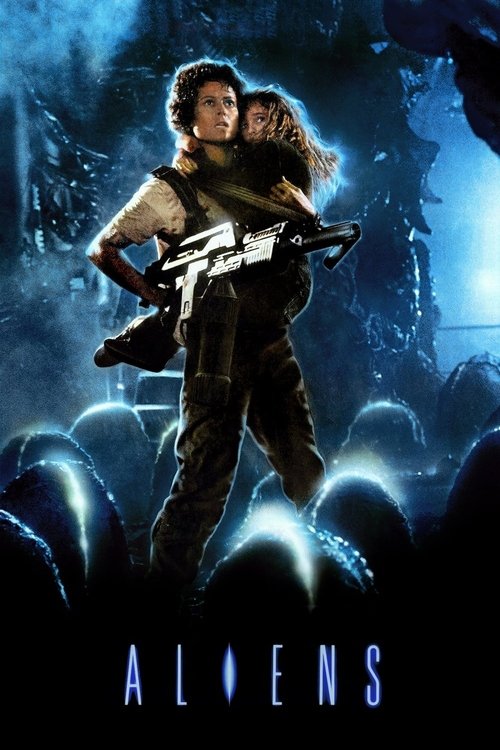
Aliens (1986)
Directed by James Cameron
No · Ultra Based
How we score movies →Consciousness Markers
Ripley is a capable female action hero and protective mother, but the film treats these qualities as character traits rather than ideological positions. No explicit feminist consciousness or interrogation of gender dynamics.
The cast includes actors of color in functional military roles, but this reflects practical 1986 action cinema casting rather than conscious representation strategy. No particular visibility given to this diversity.
Weyland-Yutani functions as a corporate antagonist, but capitalism itself is not interrogated. The company serves as a plot device rather than a target of systemic critique.
Diverse cast members present but without visible consciousness of racial representation. Their roles are functional within the narrative structure, not commented upon or highlighted.
The film contains minimal dialogue intended to educate the audience about social issues. It operates as action spectacle without pedagogical ambitions regarding social consciousness.
No LGBTQ+ themes, characters, or representation present in the film. Heteronormative military action narrative with no alternative perspectives.
No climate themes, environmental consciousness, or ecological messaging. The extraplanetary setting has no connection to climate advocacy.
No body positivity themes or consciousness. The film celebrates physical capability and strength in conventional action cinema terms.
No neurodivergent representation or themes. The narrative contains no characters or discussions related to neurodiversity.
The film is science fiction set on an alien planet. It makes no claims about or reinterpretations of historical events.


Synopsis
Ripley, the sole survivor of the Nostromo's deadly encounter with the monstrous Alien, returns to Earth after drifting through space in hypersleep for 57 years. Although her story is initially met with skepticism, she agrees to accompany a team of Colonial Marines back to LV-426.
Why it received this score
Aliens arrives from 1986 with no particular interest in the cultural preoccupations we have been asked to measure. The film is a masterwork of action cinema and science fiction spectacle, but it operates in a register entirely indifferent to contemporary progressive consciousness. Ripley functions as a capable protagonist who happens to be female and maternal, but the film treats these facts as incidental rather than ideologically significant. The supporting cast includes actors of color in meaningful roles, a decision that reflects practical casting rather than any visible commitment to representation consciousness.
The corporate antagonism in the film, centered on Weyland-Yutani's exploitation of the alien organism, might superficially resemble anti-capitalist sentiment. However, this operates strictly as plot mechanics. The film has no interest in systemic critique, class consciousness, or the machinery of exploitation. The military hierarchy is portrayed as competent and necessary within the film's logic. There is no interrogation of militarism, no climate consciousness, no LGBTQ+ content, no body positivity agenda, no neurodivergent representation, and no revisionist historical project.
What we have instead is a purely functional narrative in service of spectacle and suspense. Aliens succeeds magnificently at what it attempts, but what it attempts exists entirely outside the cultural framework we are measuring. The film is not anti-woke because it is opposed to progressive values. It simply predates the entire apparatus of cultural consciousness we have been tasked to evaluate. To score it as though it were contemporary would be to misunderstand the historical moment it occupies.
Analysis generated by our Consciousness Algorithm
Critic Reviews
“Tautly paced and expertly directed, this roller coaster ride of a motion picture offers a little bit of everything, all wrapped up in a tidy science fiction/action package.”
“For this movie stands to be something its predecessor was not, a megahit. And it deserves to be, for it is a remarkable accomplishment: a sequel that exceeds its predecessor in the reach of its appeal while giving Weaver new emotional dimensions to explore.”
“Truly great cinema- manages to dodge that 'dodgy sequel' curse with ease.”
“An inflated sci-fi action-horror film...[Cameron] does it in an energetic, systematic, relentless way, with an action dicretor's gusto, and a shortage of imagination. The imagery has a fair amount of graphic power, but there's too much claustrophobic blue-green darkness.”