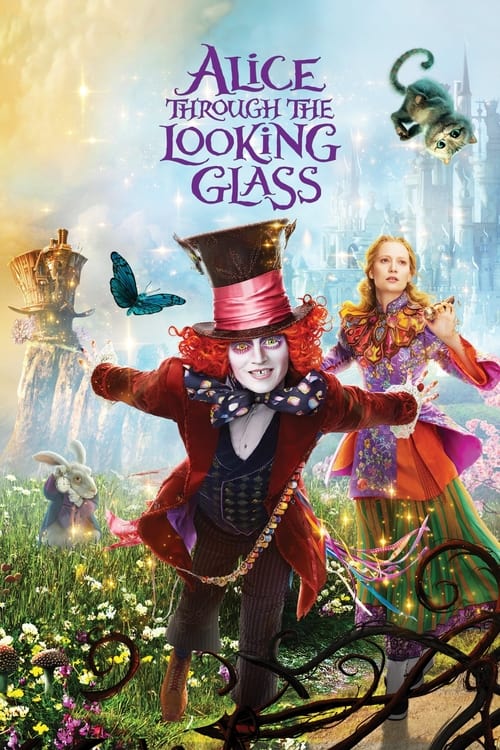
Alice Through the Looking Glass (2016)
Directed by James Bobin
No · Ultra Based
How we score movies →Consciousness Markers
Features a female lead protagonist (Mia Wasikowska as Alice), but casting is predominantly white and offers no deliberate diversification beyond maintaining the character roster from the 2010 predecessor.
Female protagonist takes action to save the Mad Hatter, but this reflects source material adaptation rather than contemporary feminist commentary or interrogation of gender dynamics.
The Mad Hatter (Johnny Depp) exhibits eccentric behavior that could be interpreted as neurodivergence, but the character is played for whimsical comedy rather than meaningful representation or advocacy.
No LGBTQ+ themes, characters, or representation present in the film.
No racial consciousness, commentary on race relations, or deliberate racial representation beyond the inherited cast from the original film.
No climate themes, environmental messaging, or ecological consciousness present in the narrative.
No critique of capitalism, wealth inequality, or economic systems; the film is entirely apolitical regarding economic structures.
No body positivity messaging or diverse body representation; characters conform to conventional Hollywood aesthetics.
No revisionist historical commentary or reframing of historical narratives; the film is a fantastical adaptation of fictional source material.
No preachy messaging, explicit social commentary, or 'lecture' moments regarding contemporary social issues or progressive values.


Synopsis
Alice Kingsleigh returns to Underland and faces a new adventure in saving the Mad Hatter.
Why it received this score
Alice Through the Looking Glass arrives as a study in the mechanics of modern studio filmmaking, which is to say it is a film designed to be produced, marketed, and consumed rather than experienced. Director James Bobin, stepping in for Tim Burton, has constructed a $170 million visual apparatus in service of a narrative that exists primarily to justify its own existence as a sequel. The female protagonist motif, inherited from Lewis Carroll's source material, provides minimal contemporary progressive resonance, as Alice's agency serves the plot mechanics rather than any meaningful interrogation of gender dynamics or female autonomy. The film offers no commentary on systemic inequality, environmental collapse, or economic structures, instead opting for the safe, apolitical territory of whimsical fantasy spectacle. The cast, predominantly white and heteronormative, requires no special consideration for its composition beyond noting the absence of any deliberate diversification effort. This is a film that exists in a pre-2015 cultural register despite its 2016 release date, indifferent to the social consciousness that would define contemporary blockbuster discourse. The critical consensus, ranging from Roger Ebert's withering assessment of "professional" mediocrity to Variety's dismissal of the film as a "mercenary backward step," reflects the sense that we are observing pure commercial machinery rather than artistic expression. One watches it with the resigned awareness that it will generate considerable box office revenue regardless of its cultural inertia, a thought that provides its own species of melancholy.
Analysis generated by our Consciousness Algorithm
Critic Reviews
“For better or worse, Looking Glass loses none of the first film’s muchness, with Bobin mimicking both his predecessor’s wildly saturated style and his general disregard for plot and substance. ”
“The only heartfelt moment of this movie for me came in the end credits, with its dedication to the late Alan Rickman, who provided the voice for the blue butterfly (and former caterpillar) Absolem. What a voice, what an actor, what a loss. ”
“You certainly get your 20 bucks worth of spectacle out of Alice Through the Looking Glass. So breathtaking are the landscapes, so whimsical are the creatures, so marvelous are the marvels that I wanted to give a standing ovation to whoever signed the check to pay for all this. Expensiver and expensiver!”
“I removed my eyeballs from my head as soon as I got back from Alice Through the Looking Glass and cleaned them in a sink. I could have left them in and only cleaned the fronts, but I didn't want to take any chances.”