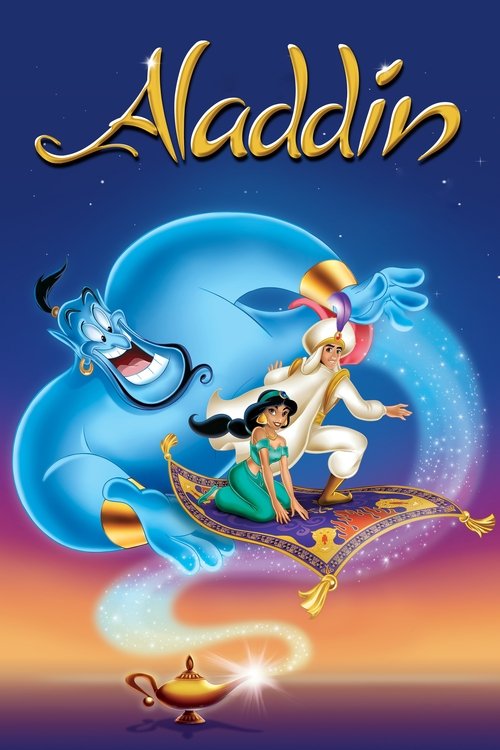
Aladdin (1992)
Directed by John Musker
No · Ultra Based
How we score movies →Consciousness Markers
Princess Jasmine demonstrates agency and intelligence, rejecting arranged marriage and pursuing her own desires. However, her arc remains secondary to Aladdin's, and her ultimate fulfillment depends on his transformation and success.
The film engages with a non-Western setting and features characters of color as protagonists, but does so through orientalist fantasy rather than cultural authenticity or meaningful engagement with Middle Eastern perspectives.
All major voice roles feature white American performers in a Middle Eastern setting. The casting choices reflect the Hollywood conventions of 1992 rather than any commitment to authentic representation.
The film occasionally emphasizes Aladdin's virtue and Jasmine's independence, but these themes remain lightly woven into entertainment rather than preachy.
The villain Jafar desires power and wealth, positioning greed as bad, but the film never meaningfully critiques capitalist systems or economic structures.
All characters conform to conventional Disney beauty standards. No meaningful engagement with body diversity or body positivity discourse.
No LGBTQ+ themes or characters present in the film.
No climate-related themes or environmental consciousness appears in the narrative.
No representation of neurodivergent characters or exploration of neurodivergent experiences.
The film is pure fantasy with no historical claims to revise or recontextualize.


Synopsis
In the boorish city of Agrabah, kind-hearted street urchin Aladdin and Princess Jasmine fall in love, although she can only marry a prince. He and power-hungry Grand Vizier Jafar vie for a magic lamp that can fulfill their wishes.
Why it received this score
Disney's 1992 "Aladdin" occupies an uncomfortable middle ground in the cultural landscape of progressive sensibilities. The film does feature a female protagonist with agency, albeit one whose agency is largely confined to rejecting unwanted suitors and waiting for a street urchin to prove himself worthy. Princess Jasmine possesses intelligence and defiance, but the narrative structure ultimately subordinates her arc to Aladdin's wish fulfillment fantasy. For a film released in 1992, this represents a modest step forward from earlier Disney conventions, yet it falls short of anything resembling contemporary expectations for female character development.
The representation question proves more vexed. The film's depiction of a Middle Eastern setting relies heavily on orientalist fantasy rather than cultural specificity. The voice cast, featuring white American performers for all major roles (Scott Weinger as Aladdin, Linda Larkin as Jasmine, Robin Williams as the Genie), presents the film's most glaring shortcoming from a modern perspective. The choice of Robin Williams as the comedic centerpiece, while undeniably talented, permits a distinctly American sensibility to colonize the entire aesthetic space. The Genie's rapid-fire impressions and pop culture references anchor the film firmly in 1990s American culture rather than any authentic engagement with the source material or setting.
The film contains no material addressing climate concerns, neurodivergence, body positivity, or systemic economic critique. Its treatment of history is invention rather than revision. The lecture energy remains minimal, which some would call a mercy. What remains is a competently made animated film that offers its female lead a modicum of voice and choice, set against a backdrop of cultural tourism that treats the Middle East as aesthetic raw material. For 1992, this represented mainstream commercial entertainment attempting modest progressive gestures. By contemporary standards, it registers as a historical artifact of an earlier, less rigorous approach to representation.
Analysis generated by our Consciousness Algorithm
Critic Reviews
“The movie that brought a hip new sensibility to animated features and which still stands up in the age of Pixar and DreamWorks thanks largely to a blistering improv turn from Robin Williams.”
“Aladdin is a film of wonders. To see it is to be the smallest child, open-mouthed at the screen's sense of magic, as well as the most knowing adult, eager to laugh at some surprisingly sly humor. ”
“Despite a similar setting-the never-never land of the Arabian Nights — the new movie is hipper, faster, more topical.”
“Aladdin is ultimately less offensive than patently ridiculous, mostly because its ethnic white noise is really just an excuse for Robin Williams—as a postmodern blabbermouthed genie who grants Aladdin three wishes—to put on the most elaborate, narcissistic circus act in the history of cinema.”