A Trip to the Moon (1902)
Directed by Georges Méliès
No — A Trip to the Moon is not woke, scoring 0 out of 100 on our wokeness meter.
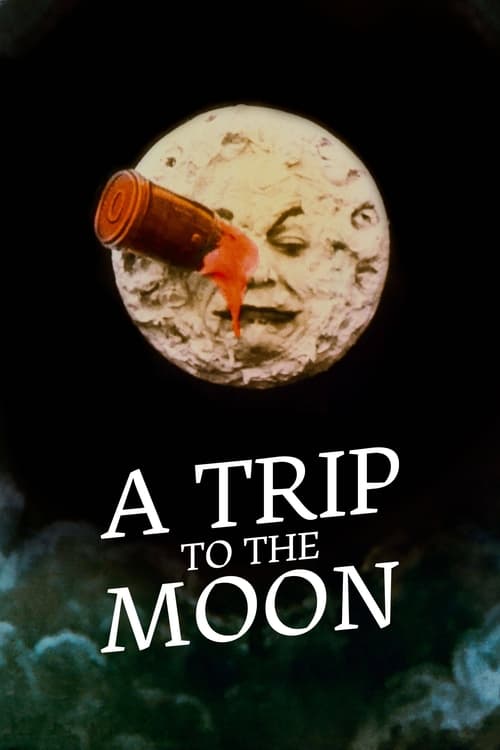
Georges Méliès built a cannon, loaded six astronomers into a bullet, and fired them into the eye of the moon.
Consciousness Markers
The cast is composed of white French theatrical performers, and no modern diverse casting effort is present.
There are no LGBTQ+ characters, relationships, or themes.
Women appear as performers and lunar figures, but the film contains no feminist argument or gender-conscious agenda.
The film has no racial consciousness or commentary on race.
The Moon voyage is fantasy adventure, with no environmental or climate message.
There is no critique of capitalism, wealth, or class exploitation.
The film does not address body image, beauty standards, or body acceptance.
No neurodivergent characters or themes are present.
The film is a fantastical adaptation of Jules Verne and related sources, not a revisionist historical narrative.
It is a playful silent spectacle, not a film designed to deliver a modern social or political lecture.
Why it received this score
Georges Méliès built a cannon, loaded six astronomers into a bullet, and fired them into the eye of the moon. What follows is a sequence of enthusiasms: an earthrise, a snowfall, a cavern of oversized mushrooms, and a race of insectoid Selenites who detonate on impact. The film is a magic act committed to celluloid, and its ambitions are entirely formal. It wants to astonish a paying crowd, and it does. Nothing in its quarter hour pauses to instruct the viewer on how to live.
The cast list offers tempting material and then withholds it. Women appear as cannon attendants dressed in sailors' outfits, as the ballet of the Théâtre du Châtelet, and as Phoebe on her crescent swing, yet the film advances no thesis about them. They are decoration in the theatrical sense, no more and no less. The astronomers are music hall singers in false beards, the lunar inhabitants are Folies Bergère acrobats in cardboard, and a viewer hunting for commentary on race, class, or the body will find only mushrooms and a man in a moon costume. The satire, such as it is, lands on scientific vanity. That is a very old target and a safe one. The Academy of Astronomy gets its umbrellas and its pomposity punctured, and nobody's arrangement of power is disturbed.
Every category of modern social consciousness we are obliged to measure returns empty. This is not a failing of the picture. It is a matter of chronology. Méliès was busy inventing the substitution splice and the dissolve, and the vocabulary we now apply to such things had not been assembled. A film can be a masterpiece and still be of no use to us as evidence. The closing parade unveils a statue bearing the motto Labor omnia vincit, which translates as labor conquers all things. It is a fine sentiment, and it says nothing about who was doing the labor, or for whom. We file the picture under wonder, and we move on to the next candidate.
Analysis generated by our Consciousness Algorithm


Synopsis
Professor Barbenfouillis and five of his colleagues from the Academy of Astronomy travel to the Moon aboard a rocket propelled by a giant cannon. Once on the lunar surface, the bold explorers face the many perils hidden in the caves of the mysterious planet.
Questions about A Trip to the Moon
Is A Trip to the Moon woke?
No — A Trip to the Moon is not woke, scoring 0 out of 100 on our wokeness meter. That earns it a verdict of Ultra Based.
Does A Trip to the Moon have any woke elements?
No. All 10 markers score zero.
How is the Woke Score calculated?
An AI-assisted process researches the film and its reception, scores it 0–100 on ten markers, then combines those into one 0–100 Woke Score. It measures a specific set of 2020s cultural themes, not film quality.