A Slice of Home (2026)
Directed by Pauline Tran
Yes · Woke
How we score movies →Consciousness Markers
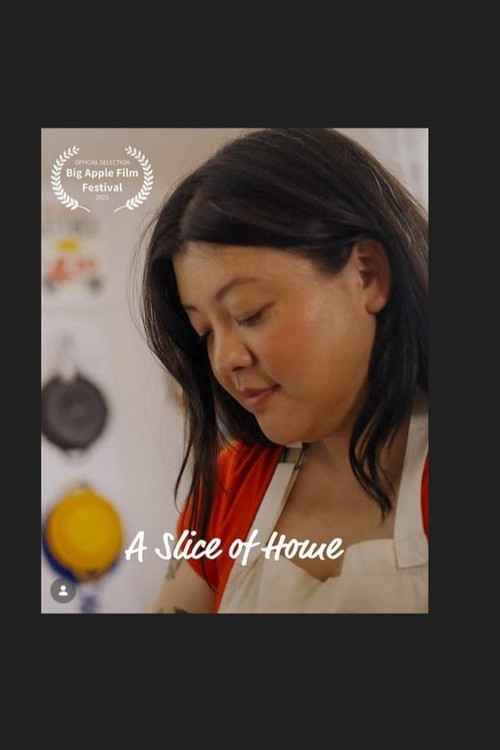
The film centers an Asian American woman as its protagonist, with the lead role going to an actual baker and storyteller (Stacey Mei Yan Fong) rather than a professional actor. This represents authentic casting rooted in lived experience.
The film operates as a document of Asian American diaspora experience and cultural negotiation. It demonstrates awareness of how immigration shapes identity, though it presents this through observation rather than analysis.
The film centers female creative labor and agency, with the protagonist's baking practice positioned as meaningful cultural work. However, it does not explicitly engage with feminist ideology or critique patriarchal structures.
The film engages with family history and intergenerational memory but does not attempt to revise or reframe historical narratives. It documents personal memory rather than engaging in historical revisionism.
The film does not engage with body image discourse or body positivity messaging. Its focus on food is cultural and memorial rather than related to body politics.
The film celebrates artisanal baking and small-scale creative production, which implicitly critiques industrial food systems. However, this critique remains subtle and is not foregrounded as ideological commentary.
The film maintains a documentary observational tone without didactic commentary. It shows rather than tells, avoiding the expository or pedagogical mode common to films with high lecture energy.
No LGBTQ+ themes or representation are evident in this film. The narrative focuses exclusively on intergenerational family dynamics and cultural identity.
No climate-related themes or environmental consciousness are present in this short film about baking and family memory.
No representation of neurodivergent characters or themes related to cognitive or developmental differences appears in this film.
Synopsis
Stacey bakes a pandan pie in memory of her Singaporean grandfather, reflecting on identity, expectations, and food as a love language.
Why it received this score
A Slice of Home operates within the contemporary genre of intimate cultural documentation, where the act of baking becomes a vehicle for intergenerational storytelling and immigrant identity negotiation. Director Pauline Tran constructs her short film around the recognizable vocabulary of food cinema, wherein culinary practice serves as metaphor for belonging, memory, and the negotiation between ancestral heritage and adopted homeland. The film's subject, a Singaporean-American baker, embodies the diaspora narrative that has become increasingly visible in prestige cinema over the past decade.
What renders this work moderately aligned with contemporary progressive sensibilities is its centering of an Asian American female protagonist whose lived experience of cultural duality drives the narrative. The film does not require her character to justify her existence or apologize for her hyphenated identity. Food itself becomes a legitimized site of cultural knowledge, rather than exoticized spectacle. The film's focus on intergenerational trauma and familial expectation, filtered through the lens of a woman of color's creative labor, hits several markers of contemporary cultural consciousness.
Yet the film resists the more didactic modes of contemporary social commentary. It does not lecture, does not deconstruct systems of oppression, does not invoke climate catastrophe, nor does it make explicit political claims about capitalism or historical injustice. It simply documents a baker at work, honoring her grandfather through the transmission of flavor and memory. This restraint, paradoxically, may be its most sophisticated engagement with the material. It trusts the audience to understand identity as something lived rather than explained.
Analysis generated by our Consciousness Algorithm