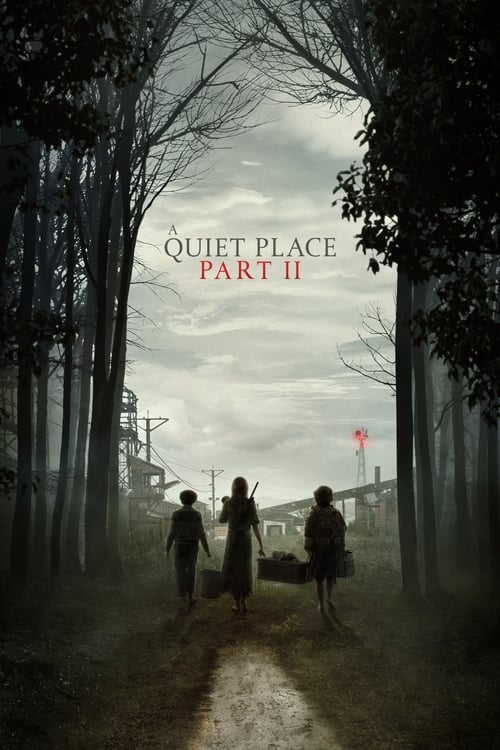
A Quiet Place Part II (2021)
Directed by John Krasinski
No · Ultra Based
How we score movies →Consciousness Markers
Millicent Simmonds appears in a central role as a deaf character, and the cast includes several actors of color in supporting positions. However, the narrative does not foreground these casting choices as markers of progressive intent.
Millicent Simmonds' character is deaf, and the film integrates sign language and deaf experience into its narrative. However, deafness is treated as a characteristic rather than as neurodivergence requiring explicit advocacy or commentary.
Emily Blunt's character maintains agency as a protective mother, but the film does not engage with feminist ideology or gender politics. Her role reflects traditional survival narratives rather than progressive gender consciousness.
Actors of color appear in the cast, including Djimon Hounsou and Okieriete Onaodowan, but the film contains no examination of race, racial dynamics, or racial justice themes.
No LGBTQ+ themes, characters, or representation are present in the film.
The apocalyptic setting is caused by alien creatures rather than environmental collapse, and the film contains no climate messaging or environmental advocacy.
The film does not critique capitalism, wealth disparity, or economic systems. Survival concerns are presented as universal rather than class-based.
No body positivity messaging or commentary on body diversity is present in the film.
The film is set in a post-apocalyptic present rather than a historical setting, and contains no attempts to reframe or reinterpret historical events.
The film maintains a straightforward genre approach to survival horror with no preachy elements or explicit messaging about social issues.


Synopsis
Following the events at home, the Abbott family now face the terrors of the outside world. Forced to venture into the unknown, they realize that the creatures that hunt by sound are not the only threats that lurk beyond the sand path.
Why it received this score
A Quiet Place Part II arrives as a film of modest progressive sensibilities, though its cultural markers deserve examination. The film's most substantive claim to contemporary consciousness rests with Millicent Simmonds, a deaf actress occupying a central role as Regan Abbott. Her presence is neither tokenistic nor accompanied by heavy-handed commentary on disability itself, which constitutes a form of restraint increasingly rare in modern cinema. The film integrates sign language and deaf experience into its narrative machinery without the self-congratulatory tone that often accompanies such choices. Beyond this, the cast includes actors of color in supporting roles, though they function primarily as plot devices in a story that remains fundamentally focused on family survival rather than social structures.
The film's thematic concerns are largely apolitical by design. A Quiet Place Part II exists within the traditions of post-apocalyptic creature horror, a genre that tends toward the universal rather than the particular. The Abbott family confronts existential threat rather than systemic oppression, and the film shows no interest in interrogating the social conditions of its devastated world. There is no lecture energy present, no attempt to reframe historical grievances, no climate messaging, and no sustained engagement with capitalist critique. The feminist elements are minimal, confined to Emily Blunt's continued agency as a mother protecting her children, a role that existed long before contemporary progressive sensibilities formalized it as such.
The film ultimately demonstrates how restraint can coexist with representation. By allowing Simmonds to simply inhabit her character rather than serve as a vessel for advocacy, Krasinski's sequel manages the unusual feat of being both progressive and uninterested in announcing itself as such. This modesty may frustrate those seeking explicit cultural commentary, but it reflects a particular artistic choice: to treat disability as a fact of human experience rather than a subject requiring special treatment. In the landscape of contemporary blockbuster cinema, this constitutes a quiet form of sophistication.
Analysis generated by our Consciousness Algorithm
Critic Reviews
“Like A Quiet Place, Part II is a lean, nearly flab- and gristle-free piece of sci-fi steak. ”
“ It’s another breathless chamber piece, expertly crafted to pack dread into every nerve-rattling sound.”
“A Quiet Place Part II proves to be an even fiercer and more emotional experience than the first instalment. Expanding its world slightly without losing sight of the elements that made the original so effective, this superb piece of mainstream horror filmmaking is bolstered by some terrific performances, most notably Millicent Simmonds as a deaf daughter assuming the role of family protector in the wake of her father’s death.”
“What’s so maddening about A Quiet Place Part II is the unused potential. Krasinski opens up the world and timeline of the film, but doesn’t utilize it in any meaningful way, introducing new ideas but then jettisoning the opportunity. Again and again he falls back on more of the same old tricks from “A Quiet Place,” which was a bore to begin with.”