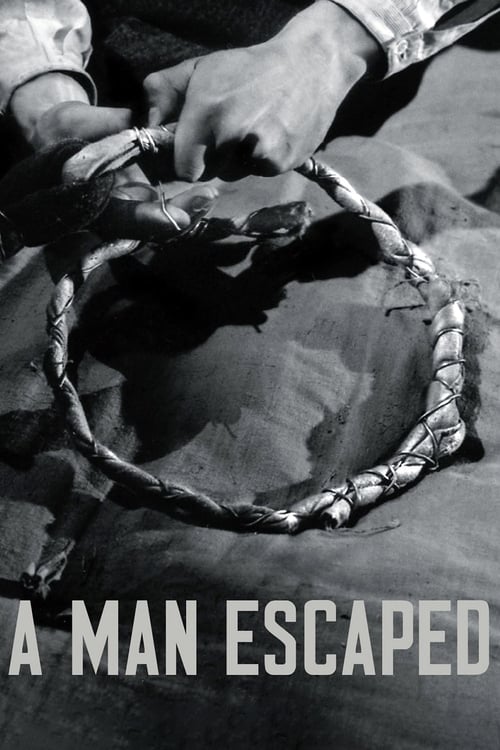
A Man Escaped (1956)
Directed by Robert Bresson
No · Ultra Based
How we score movies →Consciousness Markers
The film depicts institutional oppression within a fascist system, but this is not framed as capitalist critique. The anti-authority sentiment is incidental rather than ideological.
The cast is entirely French men, selected for their authenticity rather than demographic diversity. No consideration appears to have been given to representation.
No LGBTQ+ themes or representation present in this escape narrative.
The film features no female characters of significance and makes no gestures toward feminist consciousness.
Set in occupied France with an entirely white cast, the film engages with no considerations of racial dynamics or consciousness.
Climate concerns are entirely absent from this 1956 prison escape narrative.
No engagement with body positivity or related contemporary discourse appears in this austere work.
The film contains no representation or discussion of neurodivergence.
Bresson presents the historical situation straightforwardly without attempting to reframe or reinterpret the established narrative.
The film maintains an entirely non-preachy stance, never pausing to explain or moralize about its subject matter.


Synopsis
A captured French Resistance fighter during World War II engineers a daunting escape from prison.
Why it received this score
Robert Bresson's austere masterpiece concerns itself with the mechanics of escape rather than the politics of resistance. The film unfolds with the patient precision of a locksmith's manual, each scene a deliberate movement toward liberation. There is no effort here to retrofit the proceedings with contemporary social consciousness. The Resistance fighter is not a symbol but a problem solver, and the prison itself is less a metaphor for systemic oppression than a concrete obstacle to be overcome through ingenuity and will.
What makes this film remarkable is its refusal to sentimentalize either the protagonist or his cause. Bresson employs nonprofessional actors and spare, almost documentary-like cinematography to strip away any romantic notion of heroism. The escape is presented as technical achievement rather than moral triumph. There is no moment where the film pauses to educate us about fascism or to celebrate the virtue of the resistance fighter. The work exists in a register entirely removed from the preachy impulses of contemporary progressive cinema.
The film's spiritual dimensions, which Bresson emphasizes through sound design and compositional rigor, are matters of individual faith rather than collective ideology. We are witnessing the operations of grace and determination, not a narrative designed to advance any particular social argument. By the standards of modern cultural consciousness, this restraint and refusal to comment reads as almost willful indifference to the very categories we now consider essential to meaningful art.
Analysis generated by our Consciousness Algorithm
Critic Reviews
“Bresson's [film] is both the most realistic and the most poetic of jailbreak films.”
“Bresson's masterpiece is still a pinnacle in French cinema.”
“It is Bresson's unadorned, almost ascetic style that lifts the tale beyond a genre piece.”
“Man Escaped is a meticulously detailed, pokerfaced chronicle of escape planning and execution.”