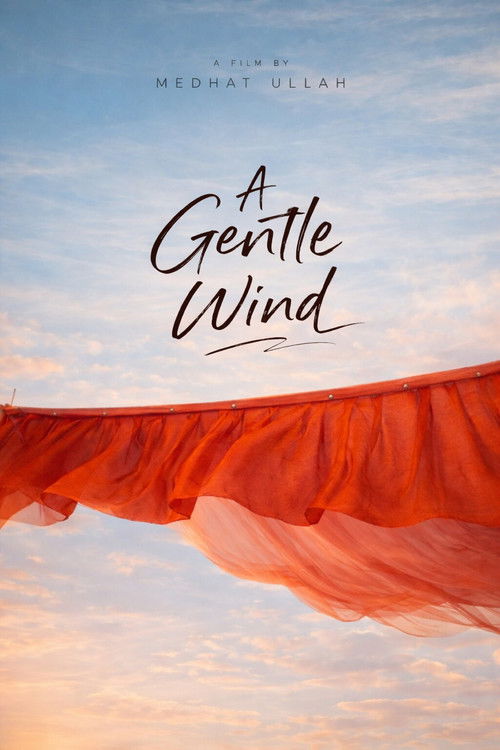
A Gentle Wind (2026)
Directed by Midhat Ullah
No · Ultra Based
How we score movies →Consciousness Markers
The film's focus on wind and natural phenomena could be interpreted as nature appreciation, though there is no explicit environmental messaging or climate advocacy.
A purely observational documentary with no narrative focus on cast or characters. Representation is not applicable to a film about wind and light.
No LGBTQ+ themes, characters, or content present. The film focuses on natural phenomena during a wedding gathering with no attention to human relationships.
No feminist themes or commentary. The film contains no narrative or thematic engagement with gender issues of any kind.
No racial themes or consciousness present. The film's focus on atmosphere and light precludes any examination of racial dynamics.
No anti-capitalist themes or critique of economic systems. The film contains no engagement with material or economic concerns.
No body-related themes of any kind. The film's focus on natural phenomena excludes any treatment of bodily representation or acceptance.
No neurodivergence representation or themes. The film contains no characters or narrative elements that would engage with this marker.
No historical revisionism or reinterpretation of historical events. The film is not engaged with history in any form.
The film's wordless observational approach actively avoids any preachy or instructional tone. There is no lecture energy present.
Synopsis
A Gentle Wind is a short observational film capturing a quiet moment where the wind moves softly through the surroundings. Filmed during a wedding gathering, the film focuses on atmosphere, light, and subtle motion, presenting a calm and reflective glimpse of nature in a simple everyday setting.
Why it received this score
A Gentle Wind presents itself as a study in observational cinema, a meditation on atmosphere and the quotidian beauty of a wedding gathering. The film's commitment to capturing light and subtle motion suggests a filmmaker interested in formal restraint rather than narrative intervention. This is, by any measure, a work of aesthetic minimalism. Whether one finds this approach compelling or merely tedious depends entirely on one's tolerance for wordless observation and the contemplation of wind patterns through space. The film offers no apparent engagement with contemporary social consciousness, which is to say it makes no effort whatsoever to address the cultural markers that define modern progressive sensibility.
The absence of thematic content is almost the entire content. There are no characters to represent, no social structures to critique, no positions on contemporary issues to discern. A Gentle Wind exists in a space prior to ideology, which is to say it exists in a space where the questions we are obliged to ask simply do not apply. The wedding setting might ordinarily provide some demographic information about the subjects being filmed, but the film's focus on atmosphere and natural phenomena renders such considerations irrelevant. One observes wind and light, not society.
This is not a criticism. Formalist cinema has its place in the grand taxonomy of human expression. It is simply to say that a film concerned primarily with the capture of ephemeral natural phenomena, with no apparent interest in narrative, character development, or social commentary of any kind, registers as essentially inert on the metrics we employ here. The film is what it is: a brief exercise in observational restraint, a moment of aesthetic contemplation. It makes no claims beyond that, and thus makes no claims worth evaluating through our particular lens.
Analysis generated by our Consciousness Algorithm