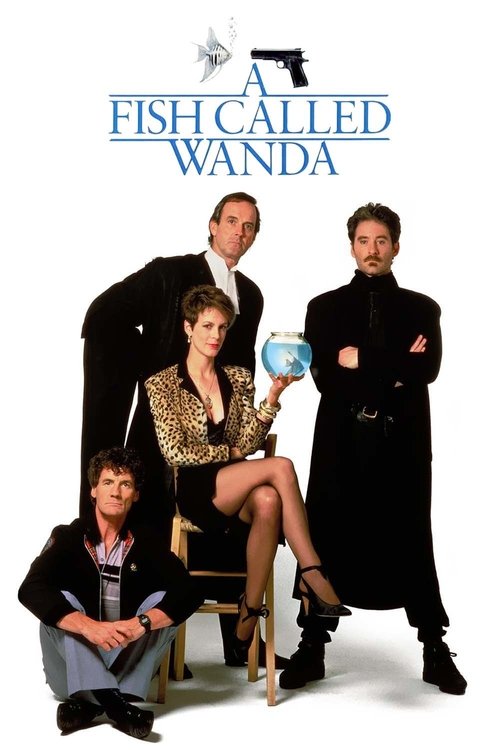
A Fish Called Wanda (1988)
Directed by Charles Crichton
No · Ultra Based
How we score movies →Consciousness Markers
Jamie Lee Curtis appears in a prominent role as an intelligent female criminal, but this casting choice reflects 1980s action cinema conventions rather than any conscious commitment to diverse representation. Her character functions within the comedy rather than challenging gender norms.
While a female character holds agency within the plot, the film contains no feminist agenda or commentary on gender relations. Women exist as comic characters alongside men, but without any particular consciousness about gender issues.
The film depicts criminals stealing diamonds, which might suggest anti-capitalist sentiment, but the narrative treats this as comedic adventure rather than political critique. Capitalism itself is never interrogated.
The cast is predominantly white British and American, reflecting the era and production context. There is no engagement with racial issues or conscious attempt at diverse casting.
John Cleese's character exhibits neurotic behavior played for laughs, but this does not constitute any genuine representation or consciousness of neurodivergence as a serious matter.
No LGBTQ+ themes, characters, or subtext are present in the film. Sexual dynamics exist only between heterosexual characters and are treated as comedic fodder.
Climate change and environmental concerns are entirely absent from this heist comedy, which focuses on crime and romance without any environmental commentary.
Body positivity is not a concern in this 1988 comedy. Physical appearance is sometimes used for comedic purposes, but there is no consciousness about body representation or acceptance.
The film is a contemporary comedy set in the present day with no historical content to revise or reinterpret. No historical narratives are engaged with.
A Fish Called Wanda contains no preachy moments, moral lectures, or attempts to educate the audience about social issues. It aims purely to entertain through comedy and crime plot mechanics.


Synopsis
While a diamond advocate attempts to steal a collection of diamonds, troubles arise when he realises he's not the only one after the collection.
Why it received this score
A Fish Called Wanda stands as a monument to the kind of film that exists purely to entertain without burdening itself with contemporary social consciousness. This 1988 crime caper concerns itself with the mechanics of a diamond heist and the romantic entanglements that arise among the criminal conspirators, executed with considerable wit and physical comedy. The film features Jamie Lee Curtis in a leading role as an intelligent con artist, which might suggest a progressive sensibility, but her presence functions as part of the comedy machinery rather than as any statement about gender dynamics or representation. The ensemble cast is competent and the screenplay demonstrates genuine comedic sophistication, yet none of this extends into the realm of cultural self-awareness.
The film's treatment of its characters and situations remains resolutely apolitical and, by contemporary standards, thoroughly indifferent to questions of representation or social commentary. Kevin Kline's Oscar-winning performance as a pompous philanderer and John Cleese's neurotic solicitor exist as comic archetypes, not as vessels for any particular ideological content. There are no lectures about systemic injustice, no celebration of marginalized communities, no interrogation of power structures. The humor derives from character types and situational absurdity, not from any particular investment in progressive values or cultural criticism. This is simply a well-crafted comedy that assumes its audience wishes to laugh rather than be educated.
To score this film for contemporary progressive consciousness would be to impose a framework that the filmmakers never intended and the work actively resists. The absence of social messaging is not a failure here but rather the point. A Fish Called Wanda represents a bygone era in which entertainment could exist without the burden of cultural commentary, a simpler time when a heist comedy could simply be a heist comedy. One regards this with a mixture of nostalgia and bemusement, much as one might observe a species of dinosaur preserved in amber.
Analysis generated by our Consciousness Algorithm
Critic Reviews
“Think of A Fish Called Wanda as the next best thing to a Looney Tunes-Merrie Melodies summerfest…Wanda defies gravity, in both senses of the word, and redefines a great comic tradition. [July 18, 1988]”
“A convulsively funny affair.[15 July 1988, Calendar, p. 6-1]”
“The dialogue reports funny things instead of showing them. The movie remains in a limbo halfway between the informed anarchy of Monty Python comedy stripped of all social and political satire, and the comparatively genteel comedy of "The Lavender Hill Mob." [15 July 1988, p.C8] ”