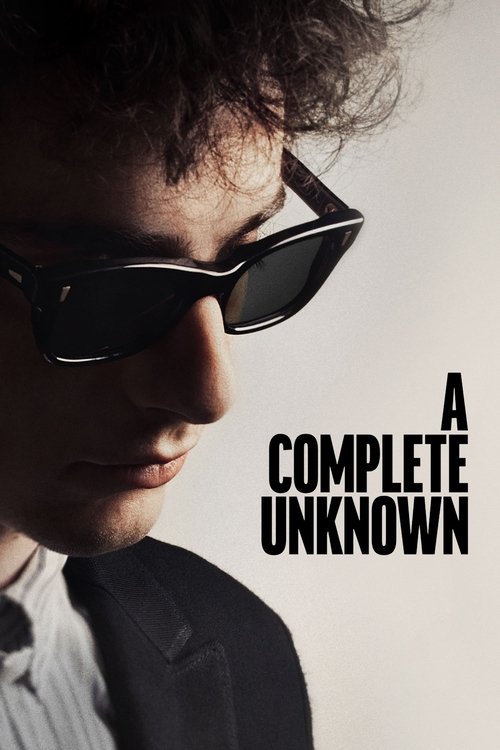
A Complete Unknown (2024)
Directed by James Mangold
No · Ultra Based
How we score movies →Consciousness Markers
Female and minority characters present reflect historical accuracy of the 1960s folk scene rather than contemporary diversity initiatives. No anachronistic casting choices or commentary on representation.
Elle Fanning portrays Joan Baez, a historically significant female musician, but the film does not advance feminist agenda or commentary on gender dynamics.
Dylan's artistic independence and rejection of commercial compromise could suggest anti-establishment sentiment, but this is not framed as explicitly anti-capitalist ideology.
Biographical exposition and music scenes carry some preachy elements inherent to the genre, but no overt preachy tone regarding contemporary social issues.
No LGBTQ+ themes, characters, or storylines present in the film.
Set during the civil rights era but the film does not center, examine, or advance racial consciousness themes.
No climate-related themes, messaging, or plot elements.
No body positivity messaging, commentary, or thematic elements present.
No neurodivergence representation, themes, or characterization present.
Film presents a period biopic of historical events without evidence of rewriting history to fit progressive narratives.


Synopsis
New York, early 1960s. Against the backdrop of a vibrant music scene and tumultuous cultural upheaval, an enigmatic 19-year-old from Minnesota arrives in the West Village with his guitar and revolutionary talent, destined to change the course of American music.
Why it received this score
A Complete Unknown arrives as a period biopic uninterested in contemporary social consciousness, a choice that might itself be read as a quiet refusal. Director James Mangold has crafted a film about an artist in the early 1960s that concerns itself primarily with artistic authenticity and musical evolution rather than social messaging. Timothée Chalamet's Dylan exists as a figure of pure creative ambition, navigating the folk music scene of Greenwich Village with the singular focus of a young man discovering his voice. The film's backdrop includes the civil rights era and cultural upheaval, yet these remain precisely that: backdrop. The 1960s setting is rendered with historical accuracy rather than as a vehicle for contemporary political instruction.
The supporting cast performs ably within this narrowly focused narrative. Elle Fanning's Joan Baez and Monica Barbaro's Suze Rotolo function as characters within Dylan's orbit, neither elevated nor diminished through contemporary lens. Edward Norton provides gravitas as a folk music elder statesman. The film's restraint in this regard is notable. It does not pause to offer commentary on gender dynamics, nor does it feel compelled to expand the historical record to accommodate modern sensibilities. A biopic about a white male artist from the 1960s, it remains precisely that: a biopic about a white male artist from the 1960s.
What emerges is a film more interested in the mechanics of artistic rebellion than in the social consciousness that might surround it. The story culminates in Dylan's controversial electric turn at Newport, framed as a matter of artistic integrity rather than as commentary on capitalism, authenticity politics, or institutional critique. For those seeking a contemporary film grappling with modern progressive concerns, this is not the film. For those seeking a straightforward account of a young musician's artistic journey, the material proves serviceable, if ultimately unambitious in its scope and vision.
Analysis generated by our Consciousness Algorithm
Critic Reviews
“Interestingly the story, despite the classic music-biopic tropes that Mangold did so much to popularise, does not conform to the classic rise-fall-learning-experience-comeback format. It’s all rise, but troubled and unclear. You might not buy Chalamet’s Dylan at first; I didn’t, until that Guthrie bedside scene. There is amazing bravado in this performance.”
“Mangold has crafted the definitive portrait of this era and the poetic, aspiring, rebellious kid who refused to be pigeonholed, held down and defined.”
“A Complete Unknown never really parses anything new about Dylan or reveals his psychology, instead letting us continue to wonder about the man behind the dark lens. It’s a thrilling, entertaining journey as we do, with performances that never falter by actors who clearly did the work and then let it go once on set. ”
“It’s the cinematic equivalent of a classic-rock station, except instead of getting the genuine articles to serenade you, you’re stuck with a bunch of actors cosplaying famous folk singers. ”