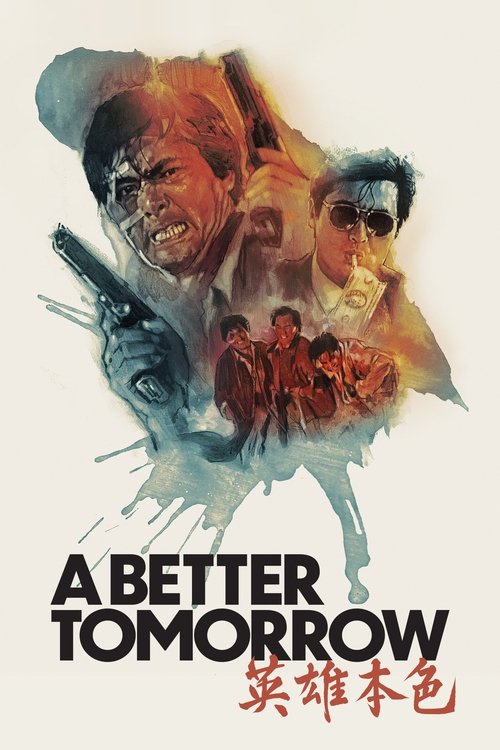
A Better Tomorrow (1986)
Directed by John Woo
No · Ultra Based
How we score movies →Consciousness Markers
The film critiques corrupt triad institutions and criminal networks, but this is moral critique rather than systemic economic analysis. The focus is personal honor within corrupt systems, not anti-capitalist ideology.
Emily Chu appears in a minor supporting role, but there is no feminist consciousness in the narrative. The film is male-centered action cinema with no gender-based social commentary.
The film reflects Hong Kong cinema's natural demographic composition. No progressive casting agenda is evident. Characters are cast according to story requirements in a Hong Kong setting.
No LGBTQ+ themes, characters, or representation. The film is a heteronormative male-centered crime drama with no exploration of sexual orientation or gender identity.
The film contains no commentary on race, racism, or racial justice. Set in Hong Kong among Hong Kong characters, race is treated as unremarkable and requires no explicit acknowledgment.
Zero environmental messaging or climate-related content. The film's concerns are entirely personal and institutional rather than ecological.
No body positivity messaging or commentary. The film presents characters and bodies without reference to contemporary body image activism.
No representation of neurodivergence or disability consciousness. The film contains no characters portrayed as neurodivergent or any related social commentary.
Not a historical film. Set in contemporary 1986 Hong Kong, the film contains no historical revisionism or reinterpretation of past events.
The film tells its story through action sequences and character relationships. It contains no preachy lecturing about social issues or explicit messaging to the audience.


Synopsis
A reforming ex-gangster tries to reconcile with his estranged policeman brother, but the ties to his former gang are difficult to break.
Why it received this score
John Woo's 1986 masterpiece exists in a cultural register entirely foreign to contemporary social consciousness frameworks. The film's preoccupations are loyalty, honor, and the tragic impossibility of redemption within corrupt institutions. These are humanist concerns of a timeless variety, not markers of 2020s progressive sensibility. The narrative follows a gangster and cop brother navigating codes of conduct and personal obligation. The film's moral universe is classical and unironic, operating on principles of individual virtue rather than systemic critique.
The cast reflects Hong Kong cinema's natural demographic composition, not any deliberate progressive casting initiative. Emily Chu Bo-Yee appears in a supporting role, but her presence requires no contemporary interpretation. She is simply a character in a Hong Kong film made by and for Hong Kong audiences. The film contains zero commentary on race, gender, sexuality, neurodiversity, environmental concerns, or the intersectional dynamics that would later become the standard vocabulary of cultural criticism. This is not a shortcoming. It is simply what the film is.
Woo's innovation was stylistic rather than ideological. The twin revolvers, the slow-motion balletics, the sweat and regret in every frame, these elements served the story of men caught between loyalty and law. To score this film by contemporary cultural markers would be to fundamentally misread its historical moment and artistic intention. It remains simply a great work about honor and betrayal, made before such concerns became subject to systematic cultural auditing.
Analysis generated by our Consciousness Algorithm
Critic Reviews
“Chow-Yun Fat’s sleek underworld charisma and intense emotion still come through. As for the action scenes, the dubbing affects them not a whit: They’re as dizzying as any Woo has concocted, and the climactic gun battle has to be one of the most ridiculously exhilarating — or exhilaratingly ridiculous — sequences of its kind.”
“Floridly romantic and serenely excessive (men shot a dozen times don't die, guns never need reloading), it has the bravado of a minor classic.”
“Woo's direction is clean and direct, with a clarity of purpose behind every scene that makes each wrenching development seem inevitable. It's strong stuff.”
“The action is fast, tough, energetic and extravagant. It is smoothly and stylishly made but more inscrutable than intended. [28 June 1989, p.D05”