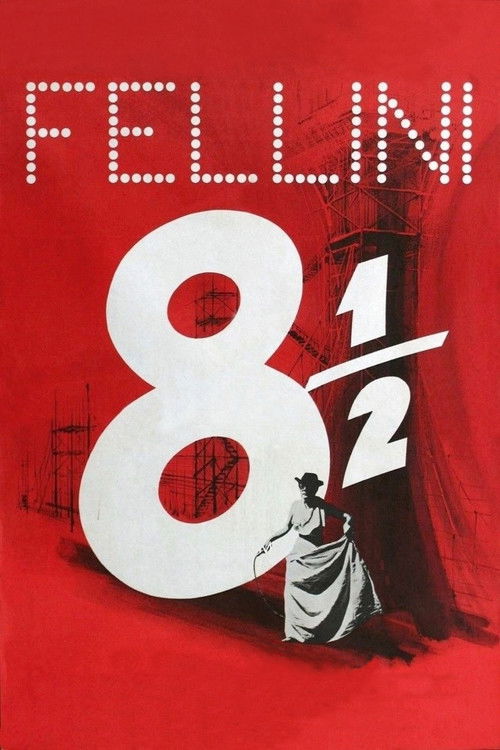
8½ (1963)
Directed by Federico Fellini
No · Ultra Based
How we score movies →Consciousness Markers
Female characters are present in substantial roles but function primarily as projections of the male protagonist's desires and anxieties rather than as autonomous individuals with agency.
While the film is deeply philosophical and operates as a meditation on art and creativity, it communicates through surreal imagery and dream logic rather than preachy exposition. The lecture energy is minimal.
While the film critiques the film industry and commercialism to some degree, this critique emerges from artistic autonomy concerns rather than systematic anti-capitalist ideology.
Academic analysis identifies one-dimensional portrayals of women that reflect mid-century patriarchal attitudes. Women exist on the margins of the narrative, serving the psychological needs of the male protagonist.
No LGBTQ+ themes or representation. The film's erotic preoccupations are entirely heterosexual and centered on the male gaze.
The film contains no engagement with racial themes or considerations. It is entirely unconcerned with racial representation or consciousness.
No climate-related themes whatsoever. The film operates in the aesthetic and psychological register, not the environmental one.
The film contains no body positivity messaging. Bodies are presented through the male gaze, often fetishized or objectified.
No representation or discussion of neurodivergence. Guido's creative crisis is presented as existential rather than neurological.
The film contains no revisionist historical narratives. It is not concerned with reinterpreting historical events.


Synopsis
Guido Anselmi, a film director, finds himself creatively barren at the peak of his career. Urged by his doctors to rest, Anselmi heads for a luxurious resort, but a sorry group gathers—his producer, staff, actors, wife, mistress, and relatives—each one begging him to get on with the show. In retreat from their dependency, he fantasizes about past women and dreams of his childhood.
Why it received this score
Federico Fellini's "8½" stands as a monument to mid-century European art cinema, a swirling meditation on male creative crisis that concerns itself not with social progress but with the interior landscape of artistic neurosis. The film presents women as phantasms and fantasies, romantic interests and maternal figures, their characterization driven less by any modern sensibility than by the psychological preoccupations of its protagonist. Claudia Cardinale, Anouk Aimée, and Sandra Milo populate the narrative as projections of Guido's desire and anxiety, their agency subsumed entirely into his existential journey. This is not incidental to the film's vision but central to it.
The text contains no engagement with progressive social consciousness as we understand it in the 2020s. There is no examination of systemic inequality, no interrogation of power structures, no celebration of marginalized voices. The film's modernist sensibility operates in an entirely different register, concerned with form, with the fractured psyche, with the impossibility of artistic completion. If anything, the film's treatment of its female characters would likely provoke contemporary criticism, though such criticism would misread the film's actual concerns. Fellini was interested in the surreal and the dreamlike, not in representation.
The film's genius lies in its visual audacity and its honest portrayal of creative paralysis. To search for contemporary social consciousness here is to misunderstand what Fellini was attempting. This is a work profoundly unconcerned with the markers of modern progressive sensibility. This is a film about art, not justice.
Analysis generated by our Consciousness Algorithm
Critic Reviews
“8 1/2 is the best film ever made about filmmaking, told from the director's point of view with its hero Guido clearly intended to represent Fellini.”
“8½ is Fellini's richest and most inventive work, a silvery tabernacle of kooky dream sequences and evocative flashbacks that opens his arms wide to the enigmas of childhood, religion, art, sex, and love.”