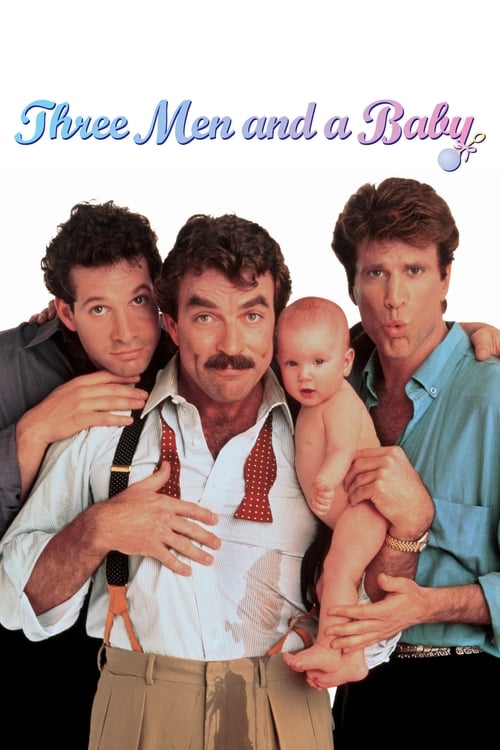
3 Men and a Baby (1987)
Directed by Leonard Nimoy
No · Ultra Based
How we score movies →Consciousness Markers
While the premise involves men doing childcare, the film treats this as comedic aberration rather than serious critique. Female characters lack agency and exist primarily as romantic interests or maternal stereotypes.
While the film avoids overt preachiness, its premise about men learning to care for a child carries implicit messaging about gender roles, though delivered through comedy rather than exposition.
The cast is predominantly white and male, with female characters relegated to supporting roles. No meaningful representation of marginalized groups appears in the narrative.
A baby is central to the plot, but body positivity messaging is not present. The film contains standard 1980s comedic assumptions about physical appearance and attractiveness.
The film contains no engagement with racial themes, consciousness, or representation. Racial dynamics are entirely absent from the narrative.
No LGBTQ+ representation or themes present. The film exists entirely within heteronormative assumptions about family and relationships.
Climate concerns do not appear in this 1987 comedy. Environmental consciousness is entirely absent from the film's worldview.
The film presents no critique of capitalism or economic systems. Wealth and class are treated as background elements without examination.
No representation of neurodivergent characters or acknowledgment of neurodiversity. The film operates within neurotypical assumptions.
Being a contemporary comedy, the film contains no historical narrative to revise. It makes no claims about history whatsoever.


Synopsis
Three bachelors find themselves forced to take care of a baby left by one of the guy's girlfriends.
Why it received this score
Three Men and a Baby arrives as a curious artifact of late 1980s sensibilities, a film that traffics in the mildest possible disruption of gender norms while ultimately reaffirming the status quo with warm, embracing arms. The premise itself contains a whisper of social consciousness: three unmarried men learning to nurture a child, which one might charitably interpret as exploring masculine vulnerability. Yet the film treats this scenario not as a genuine interrogation of parental responsibility or domestic labor, but rather as a setup for comedy derived from male incompetence. The three leads are portrayed as lovable buffoons who bumble through diaper changes and feedings with the kind of exasperation that suggests childcare is an amusing aberration rather than legitimate work.
The female characters exist primarily as romantic possibilities or maternal figures, with little agency beyond their relationships to the male protagonists. Margaret Colin's character represents the potential romantic interest, while the older women in the ensemble serve as nurturing stereotypes. There is no interrogation of why these men have no female partners to share this responsibility, nor any suggestion that the absence of a mother figure constitutes a structural problem worth examining. The film's underlying assumption remains comfortingly conventional: men taking care of a baby is funny precisely because it violates natural order. This is not progressive commentary. This is repackaged tradition with a winking smile.
Where the film does achieve a peculiar kind of relevance is in its complete indifference to the economic precarity that would realistically accompany its premise. These men somehow manage careers while providing round-the-clock childcare without apparent consequence. Class anxiety is entirely absent, as is any recognition of systemic inequality. The film simply does not occupy the conceptual space where such concerns might reside. It is a movie about nothing, made by a filmmaker of considerable talent, in service of a premise that required nothing from cinema except a willingness to find men changing diapers inherently amusing.
Analysis generated by our Consciousness Algorithm
Critic Reviews
“Charming and watchable. The three leads show their comedy potential.”
“With Three Men and a Baby, Nimoy proved himself to be an adept handler of mainstream 80s comedy, updating the far more farcical (and chauvinist) French original Trois Hommes et un Couffin into something more Hollywoodised and slick. But within the slickness, he let his three leads, Tom Selleck, Steve Guttenberg and Ted Danson shine through with their own individual charm.”
“Luckily, there's enough of the domestic comedy to make the movie work despite its crasser instincts. One of the big surprises in the movie is Selleck's wonderful performance as the bachelor architect. After playing action heroes on TV and in the movies, he now reveals himself to be a light comedian in the Cary Grant tradition - a big, handsome guy with tenderness and vulnerability”
“Director Leonard Nimoy does not use his ears for comedy -- nor his eyes, even. His three leads recite their lines as though they wanted to take their jumbo-sized salaries and run -- which, given this movie, maybe isn't such a dumb idea.”