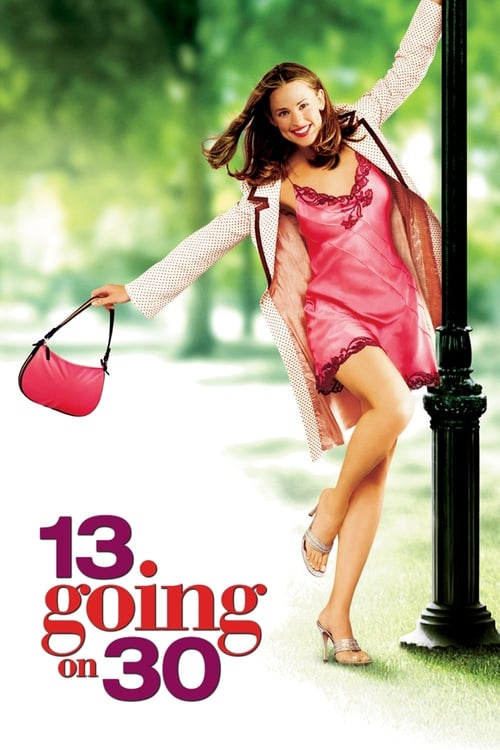
13 Going on 30 (2004)
Directed by Gary Winick
No · Ultra Based
How we score movies →Consciousness Markers
Proto-feminist elements appear through emphasis on female friendship and authenticity, but the film ultimately endorses conventional romance narratives without systematic critique.
The cast is predominantly white with minimal racial diversity. Jennifer Garner leads, but supporting characters lack representation typical of modern expectations.
The film is straightforward entertainment without preachy moralizing or attempts to deliver lessons about social issues.
The film celebrates material success and consumer culture in the fashion industry rather than critiquing capitalism.
No LGBTQ+ themes, characters, or representation appear in the film. It is a conventional heterosexual romantic comedy.
The film exists in a predominantly white world with no acknowledgment of race or racial themes.
No climate themes or environmental consciousness present in the film.
The entire premise treats the protagonist's adult body as inherently superior to her childhood body, directly opposing body positivity principles.
No neurodivergent characters or themes are present in the film.
No historical revisionism or reinterpretation of historical events appears in this contemporary fantasy film.


Synopsis
After total humiliation at her thirteenth birthday party, Jenna Rink wants to just hide until she's thirty. Thanks to some magic wishing dust, Jenna's prayer has been answered. With a knockout body, a fabulous wardrobe, an athlete boyfriend, a dream job, and superstar friends, this can't be a better life. But soon Jenna realizes that adult life isn't as easy as she hoped for.
Why it received this score
13 Going on 30 occupies a peculiar position in the cultural timeline, released at a moment when progressive social consciousness had not yet calcified into the contemporary form we now examine with such tedious precision. The film is, in nearly every measurable dimension, a product of early-2000s mainstream entertainment values, untouched by the sensibilities that would come to dominate discourse in the following decades. Jennifer Garner's protagonist gains a glamorous adult body and navigates the world of high fashion, a journey the film treats as fundamentally desirable, celebrating consumer excess and material acquisition without irony or critique. The premise itself, predicated on the notion that a thirteen-year-old girl's body is an inferior state requiring replacement with an adult physique, runs counter to any contemporary framework of bodily acceptance.
The film's gender politics are distinctly pre-2010s in character. While it gestures toward valuing female friendship and authenticity over superficiality, these themes emerge organically from romantic comedy conventions rather than from any systematic interrogation of patriarchal structures. The cast is overwhelmingly white, existing in a world where race is simply not a category that requires acknowledgment. LGBTQ+ representation is nonexistent. The fashion industry, which serves as the film's primary setting, is presented as glamorous rather than as a site of capitalist exploitation or body-image pathology. There is no environmental consciousness, no neurodivergent representation, no historical revisionism, and no attempt to deliver moral instruction through preachy speeches.
This is precisely what pre-woke cinema looked like: entertainment that operated according to its own internal logic without constant reference to social justice frameworks. One might view this as either refreshing or oblivious, depending on one's temperament. From the perspective of contemporary cultural analysis, however, it barely registers on the instruments we have developed.
Analysis generated by our Consciousness Algorithm
Critic Reviews
“The rare commercial comedy that leaves you entranced by what can happen only in the movies.”
“The film lacks the emotional resonance that made "Big" such a sentimental favorite with audiences of all ages. ”