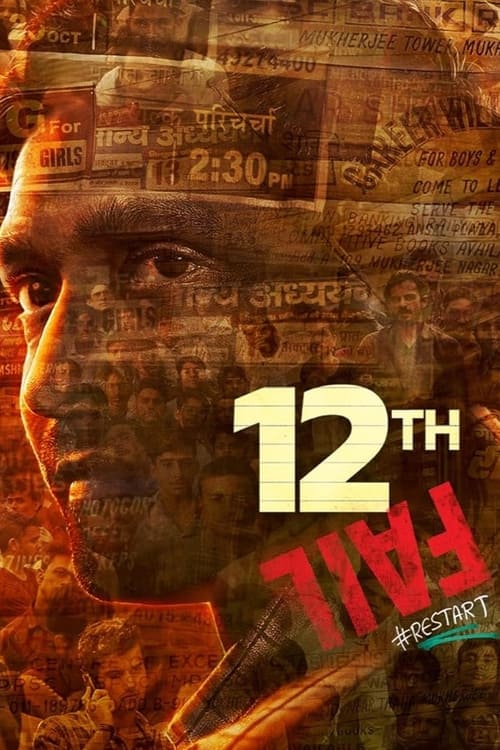
12th Fail (2023)
Directed by Vidhu Vinod Chopra
No · Ultra Based
How we score movies →Consciousness Markers
The film depicts class struggle and economic inequality in India, which touches on structural disadvantage, but does not frame this through contemporary racial or caste consciousness narratives.
The cast naturally reflects India's demographic diversity, but this is standard Indian cinema practice, not a deliberate progressive casting choice. No evidence of conscious representation politics.
The film occasionally lectures about perseverance and determination, but lacks the preachy quality of explicitly teaching viewers about social justice frameworks or progressive consciousness.
Female characters appear in the film but primarily in supporting roles. There is no explicit feminist agenda or consciousness about gender inequality in the examination system.
The film does not critique capitalism or wealth accumulation. Success is defined by obtaining a government position, presented as an individual achievement rather than a systemic problem.
While the film may implicitly address learning struggles, there is no explicit representation of neurodivergence or celebration of neurodivergent perspectives.
No LGBTQ+ themes or characters are present in the film. The narrative is entirely focused on heterosexual male protagonist's academic journey.
No climate-related themes, environmental consciousness, or ecological concerns are present in this academic drama.
No engagement with body diversity, size acceptance, or body positivity messaging appears in the film.
The film is based on a contemporary true story and contains no revisionist historical project or reframing of historical events.


Synopsis
Based on the true story of IPS officer Manoj Kumar Sharma, 12th Fail sheds limelight on fearlessly embracing the idea of restarting the academic journey despite the setbacks and challenges and reclaiming one's destiny at a place where millions of students attempt the world's toughest competitive exam: UPSC.
Why it received this score
12th Fail arrives as a straightforward biographical drama about individual ambition and academic persistence in India's brutally competitive civil service examination system. Vidhu Vinod Chopra's film concerns itself primarily with the mechanics of determination and personal triumph, not with interrogating the social structures that make such triumph necessary. The narrative celebrates the UPSC system as a pathway to dignity and success, presenting meritocratic ideals as fundamentally sound rather than questioning whether merit itself can be fairly assessed across India's vast inequality landscape.
The film does engage implicitly with class consciousness, depicting the material struggles of lower-income students preparing for exams, but this engagement remains observational rather than critical. We witness poverty and disadvantage as obstacles to overcome through willpower, not as symptoms of systemic failure requiring collective action or institutional change. The cast composition reflects Indian demographic reality in a naturalistic way, which is to say it is neither a statement about representation politics nor a deliberate exercise in casting for social signaling.
Absent from the film are meaningful engagements with contemporary progressive cultural markers. There is no visible LGBTQ+ narrative, no feminist consciousness, no climate concern, no interrogation of capitalist structures, no celebration of neurodivergence or body diversity, and no revisionist historical project. What remains is a film about one man's refusal to accept failure, which is admirable as human drama but culturally inert by contemporary standards of progressive awareness.
Analysis generated by our Consciousness Algorithm
Critic Reviews
“It's unimaginably refreshing to see Vidhu Vinod Chopra and his team go back to the basics, employ long takes, use sound design to translate the emotions on-screen.”
“12th Fail is top-class and a must-watch that will leave you impressed and inspired through almost every scene of its 147 minutes.”
“12TH FAIL is a nicely told, touching underdog success story. Well played and technically at a high level.”
“A warm, if sentimental, paean to the idea that success in India, despite endemic corruption and the caste system, can still be achieved through meritocratic means.”