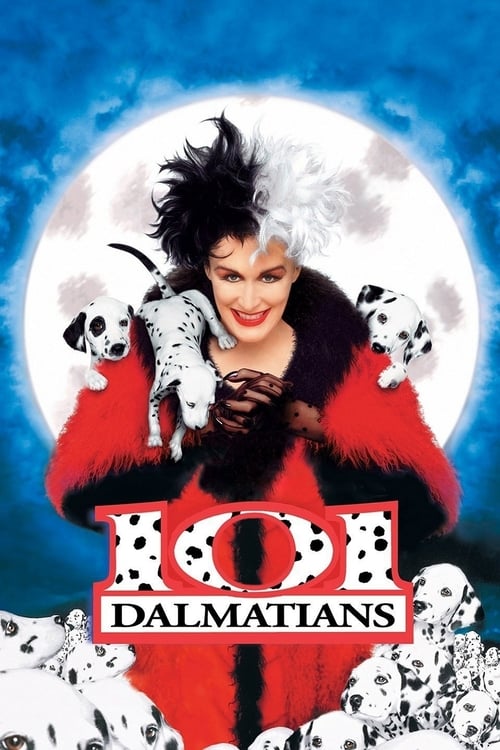
101 Dalmatians (1996)
Directed by Stephen Herek
No · Ultra Based
How we score movies →Consciousness Markers
The plot concerns preventing the killing of puppies for fur, which tangentially touches on animal welfare and anti-consumption messaging. However, this is not articulated as environmental consciousness but rather as basic moral opposition to animal cruelty.
The cast is predominantly white and British. Minor characters include staff and supporting figures shown with affectionate stereotyping typical of 1990s British comedies. No effort toward meaningful representation is evident.
Joely Richardson's character works as a fashion designer, providing nominal female professional presence. However, this is functional to plot rather than thematic. No interrogation of gender dynamics or women's agency occurs.
The film occasionally articulates its basic moral premise that killing puppies is wrong, but this is delivered as plot motivation rather than preachy messaging. Minimal hectoring tone present.
The film is set in a predominantly white British context and makes no apparent effort to acknowledge or address racial dimensions of any kind. Racial consciousness is absent.
Cruella represents unbridled consumer excess and fashion-industry obsession, but the film does not interrogate capitalism itself. The critique is of individual villainy rather than systemic economic structures.
No LGBTQ+ themes, characters, or representation present. The film contains no acknowledgment of sexual orientation or gender identity beyond heterosexual relationships.
No body positivity themes present. The film contains no commentary on body standards, appearance, or physical diversity. Bodies are treated as unremarkable vehicles for character.
No representation of neurodivergence, mental disability, or neurodivergent characters. The film contains no acknowledgment of these dimensions of human experience.
The film contains no historical narrative or revisionist engagement with history. It is a straightforward adaptation of fantasy material with no historical claims or revisions.


Synopsis
An evil, high-fashion designer plots to steal Dalmatian puppies in order to make an extravagant fur coat, but instead creates an extravagant mess.
Why it received this score
This 1996 live-action translation of Disney's animated classic is a thoroughly traditional family entertainment product, content to occupy the space between fidelity to source material and the specific commercial demands of mid-1990s cinema. Glenn Close chews scenery with the commitment of someone who understands that Cruella de Vil is fundamentally a cartoon villain and has chosen to embrace that assignment rather than deconstruct it. The narrative follows its precursor with remarkable literalism, adding little that might complicate or interrogate the original premise. We get a villain motivated by fashion-industry ambition, protagonists motivated by protecting their offspring, and a supporting cast of British eccentrics rendered as quaint character types rather than fully realized human beings. The film makes no apparent effort to interrogate the ethics of its own existence as a product derived from a 1961 animated film which itself adapted a 1956 novel, a genealogy that itself might warrant some reflexivity about creative ownership and adaptation, but such concerns are not this film's burden.
The casting reflects the sensibilities of 1996 mainstream cinema without any evident attention to representation or diversity beyond the baseline expectations of a British-set comedy. The household staff and minor characters are portrayed with a kind of affectionate condescension that reads as period-typical rather than progressive. The film's treatment of gender is incidental rather than intentional. Joely Richardson's Anita is a working character designer, which provides some nominal professional dimension to the female leads, though this detail serves primarily as plot mechanics rather than as any statement about women's labor or economic autonomy. The narrative structure remains unchanged from the original: dogs are in peril, humans protect them, the villain is defeated, order is restored. There is no social commentary about fur coats or animal welfare beyond the basic premise that killing puppies for a coat is bad, a moral position so fundamental that it barely qualifies as consciousness at all.
The film operates with the confidence of a major studio product that has no interest in anything beyond competent execution of a proven formula. It is a film that begins from the assumption that the only question worth asking is whether it will entertain audiences, not whether it has anything to say about the world or the society in which it was made. For a work released in 1996, this is a notably unambitious stance, yet it is the stance the film maintains throughout its runtime with remarkable consistency.
Analysis generated by our Consciousness Algorithm
Critic Reviews
“Director Stephen Herek does an admirable balancing job, though the movie slows whenever the animals solo onscreen. [27 Nov 1996 Pg.01.D]”
“For us dog saps, it is especially nice to see cuddlesomely real pooches instead of drawn ones doing smart-pet tricks.”
“Where the film misses its biggest bet, however, is in depriving the animals of the voices they had in the animated version.”
“But by the end, the charm and delicacy of the 1961 cartoon have long been replaced by laborious gross-outs. Is this now official Disney policy?”